
Last updated October 15, 2026
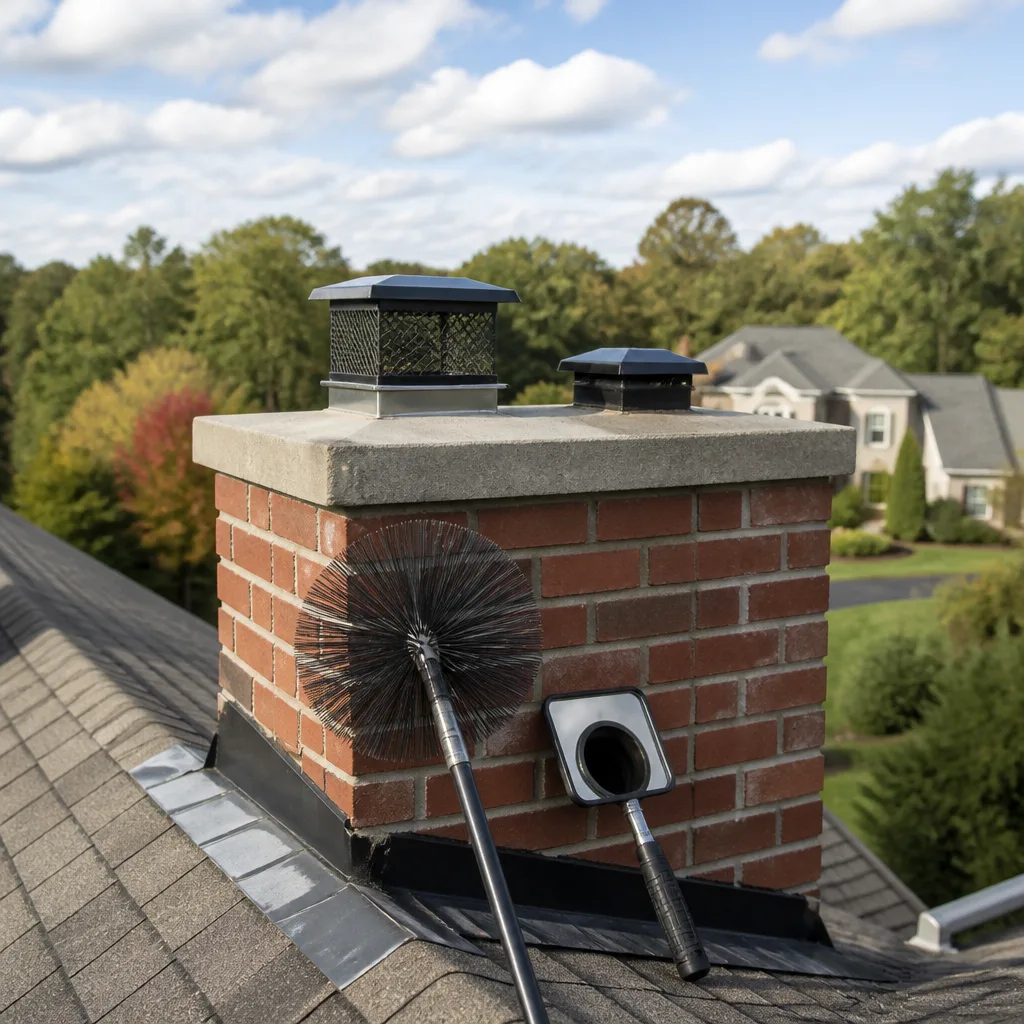 Sweep & inspection
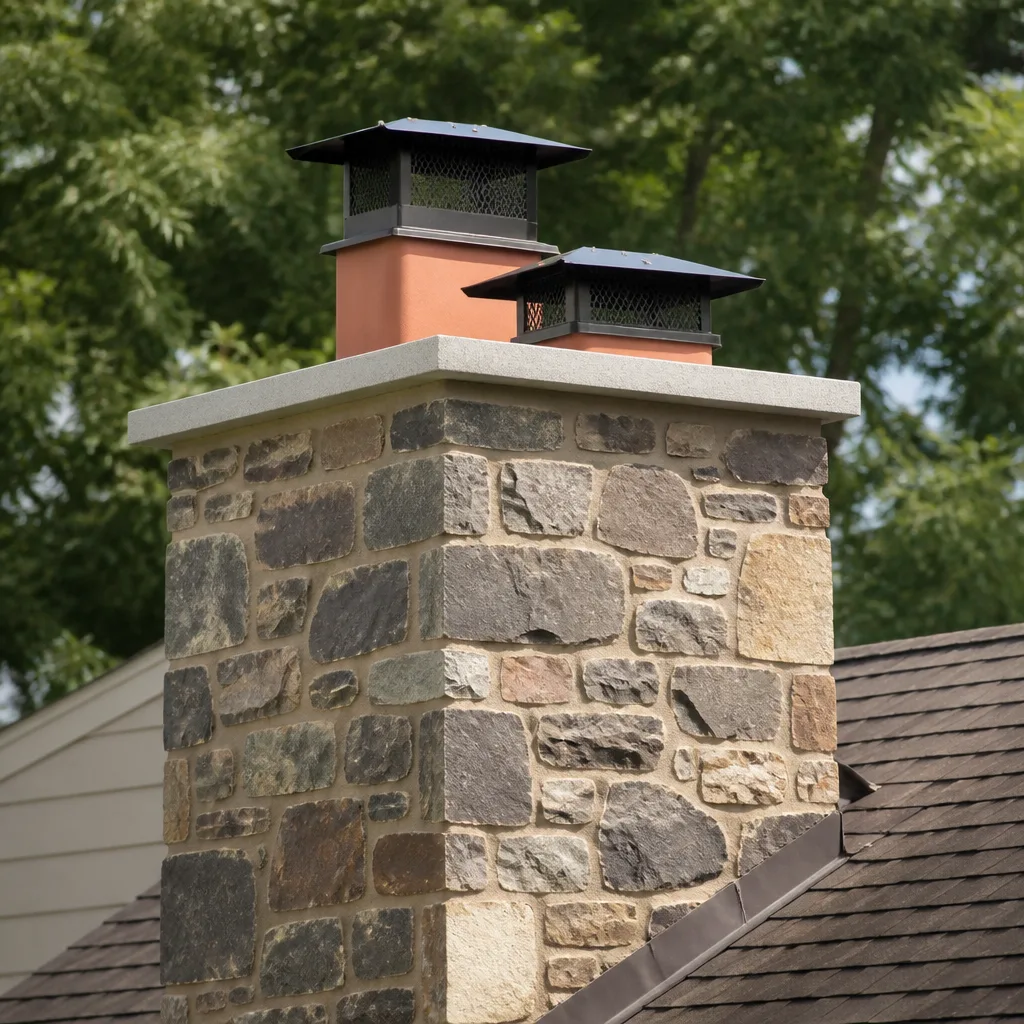 Caps & crowns
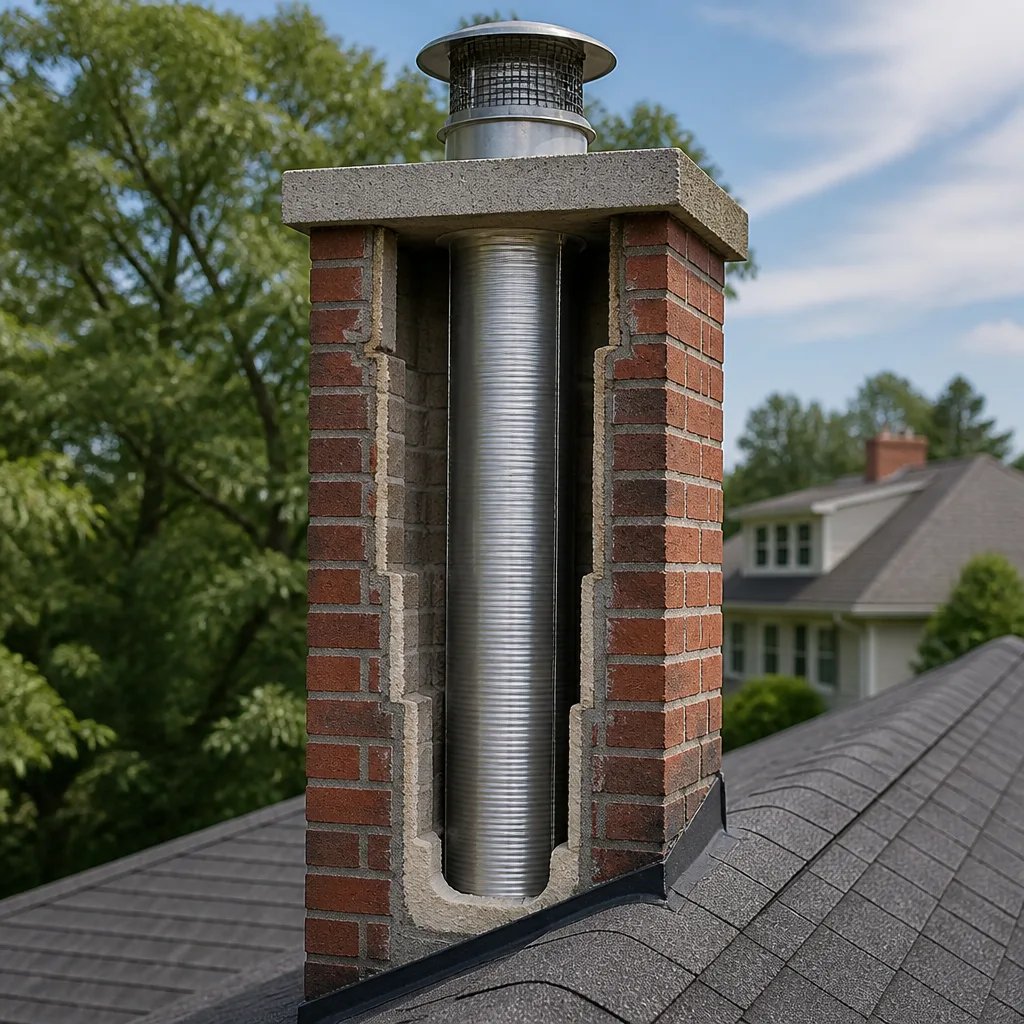 Flue relining
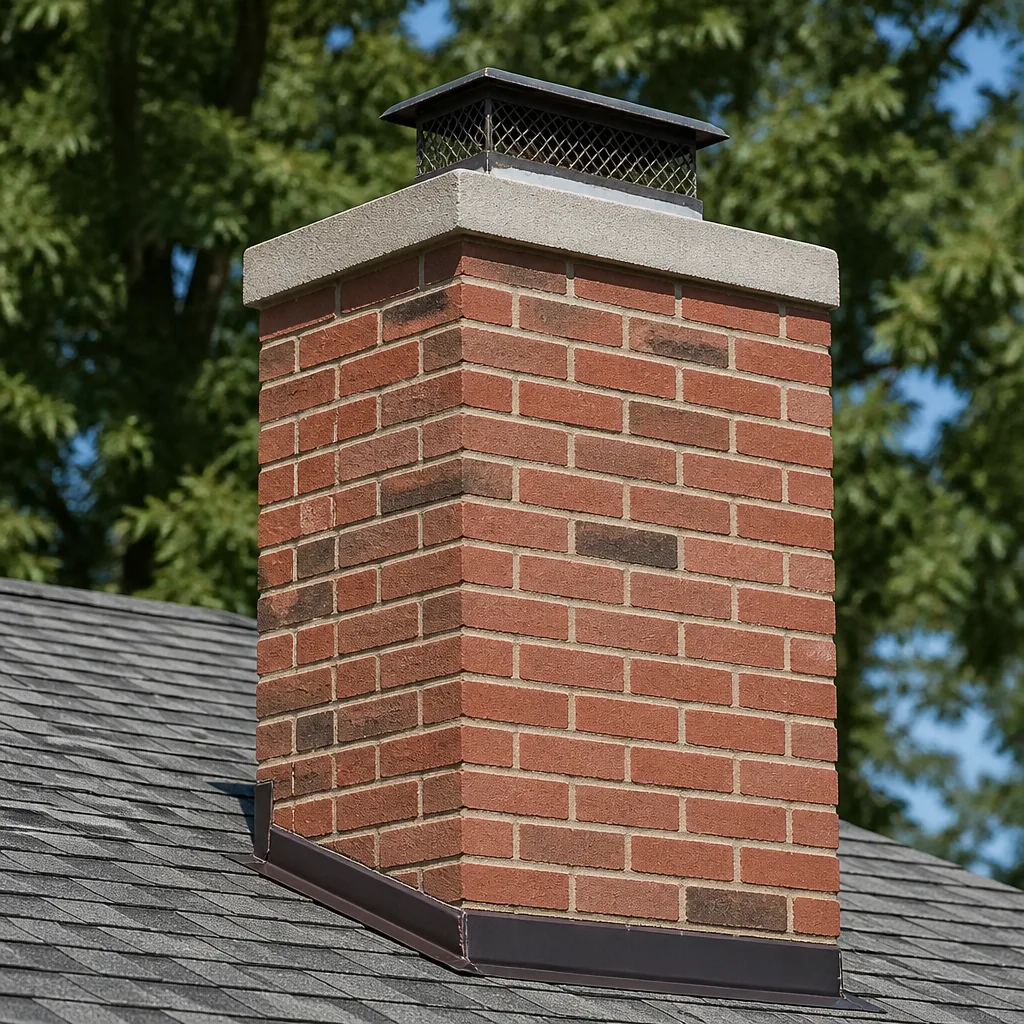 Masonry repair
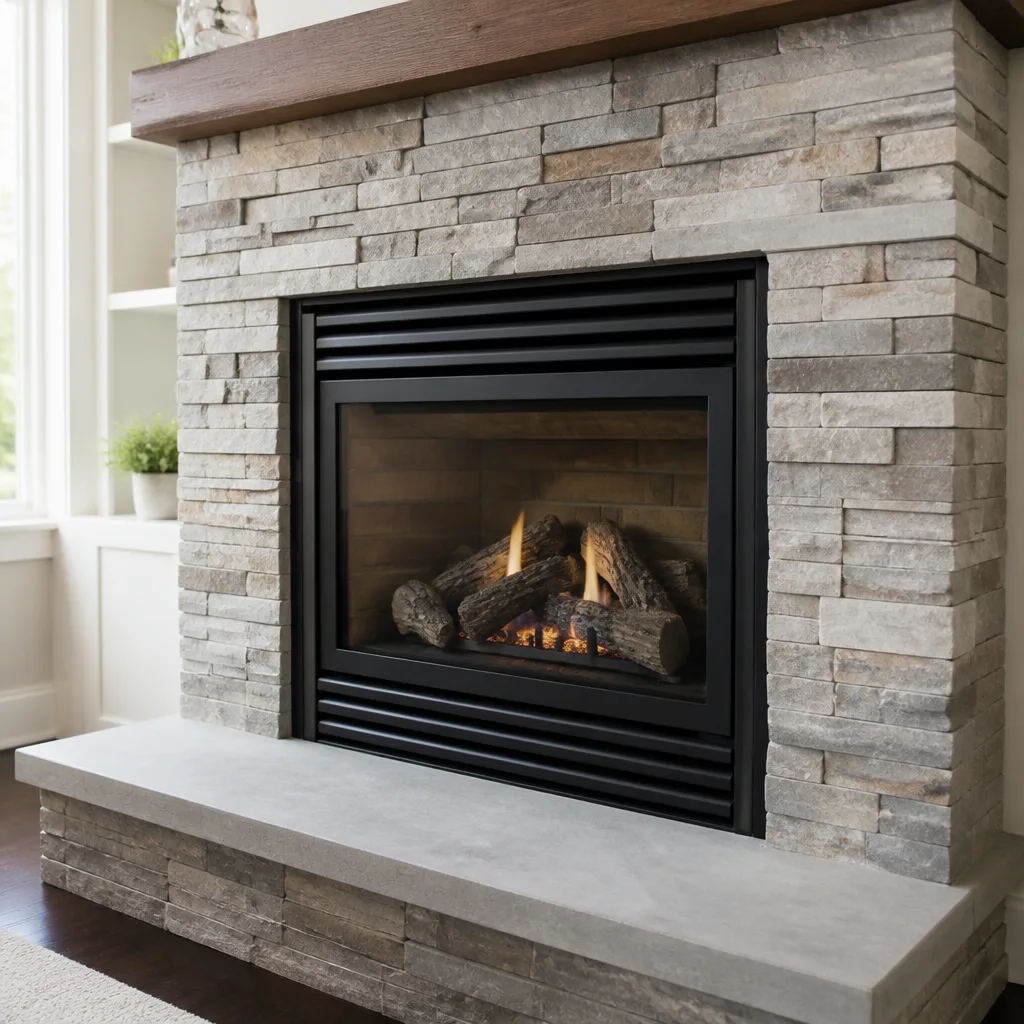 Gas fireplace service
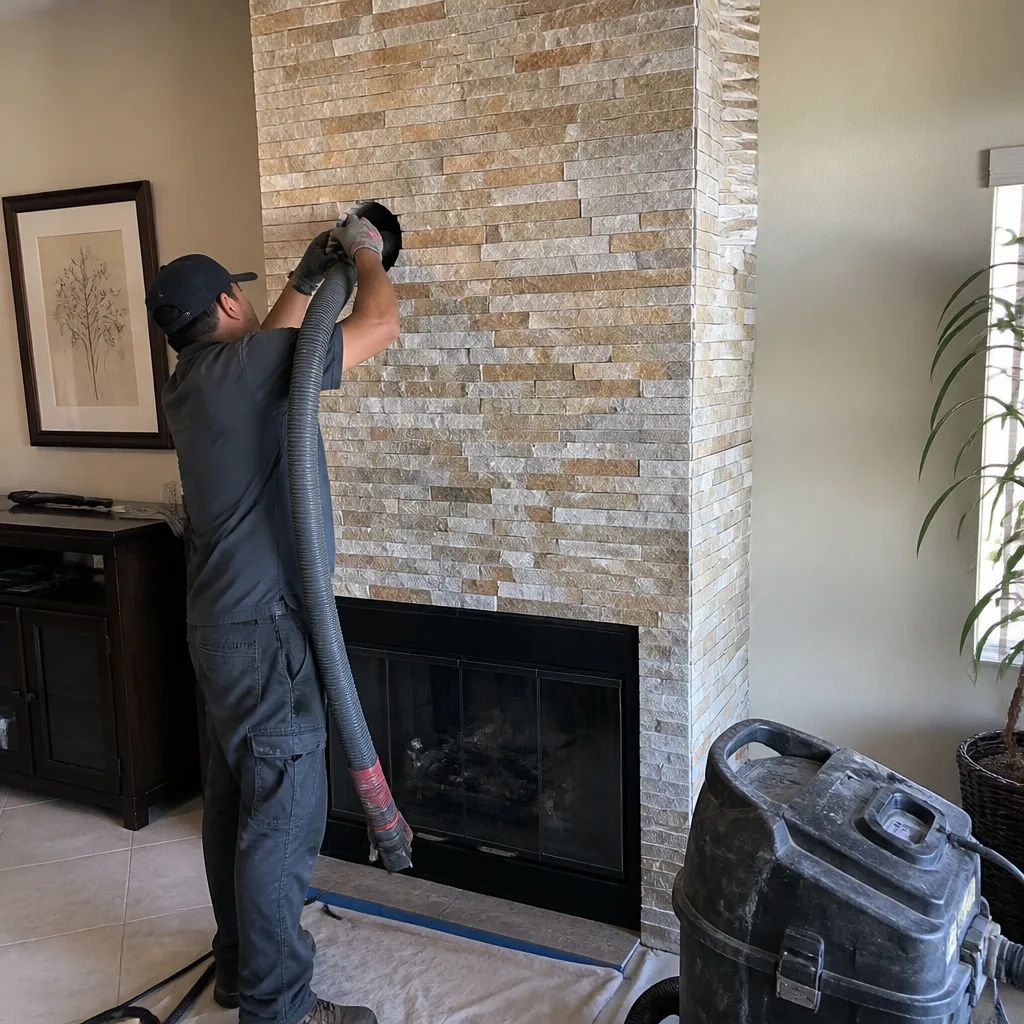
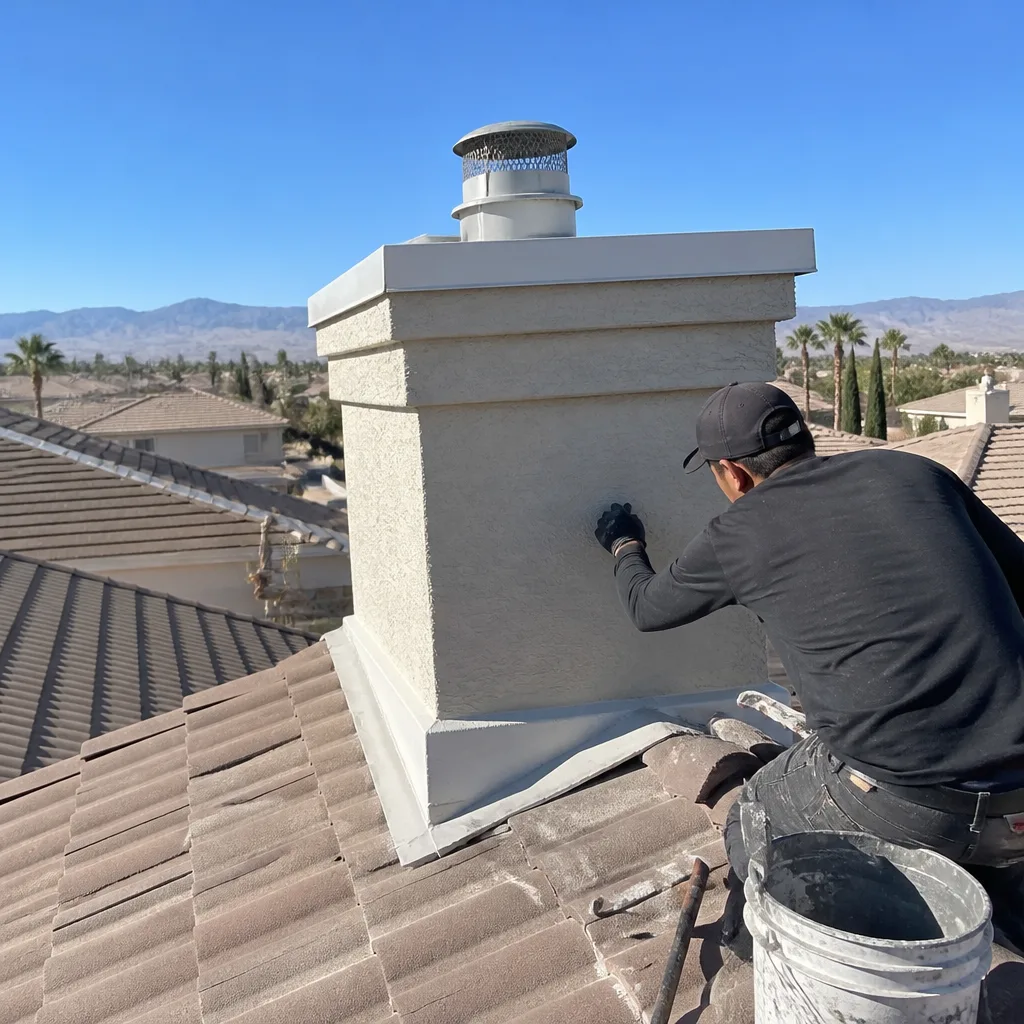
Level 1 sweep and inspection to the NFPA 211 annual standard - flue, crown, cap, and flashing checked and photographed
Chimney sweep logs do not sweep chimneys. They loosen some creosote - which then falls where a brush and vacuum still have to collect it.
How to Hire a Chimney Cleaning Contractor in Las Vegas: A Step-by-Step Guide
Most Las Vegas homeowners don’t get burned by chimney scams because they failed to check a license. They get burned because they never asked the right questions before the technician walked through the door. A vague verbal quote, a mumbled answer about warranty coverage, a shrug when you ask what exactly the $49 special includes. That’s where price-switching lives. This guide gives you the three questions that disqualify a dishonest contractor in under two minutes, plus a full hiring process built for the Las Vegas market, where out-of-state seasonal sweeps roll through every fall and vanish by April. For seasonal chimney cleaning care for Las Vegas, timing your sweep right matters.
Styles & brands we work with
Quick Answer
To hire a trustworthy chimney cleaning contractor in Las Vegas, get a written price before work starts, verify the company’s Nevada contractor license and CSIA certification status, ask what the sweep includes in dollars and cents, confirm the guarantee in writing, and check how quickly a live person answers the phone. A legitimate company answers all five without hesitation. A company that hedges on any one of them is telling you something important.
Table of Contents
- The Three Questions That Disqualify a Bad Contractor Fast
- Step-by-Step: The Hiring Process That Filters Out the Bad Actors
- How to Read Nevada Contractor Licenses and CSIA Certification
- Red Flags Specific to the Las Vegas Chimney Market
- What a Legitimate Written Estimate Must Contain
- How to Verify a Company’s Guarantee Is Real
- The Exact Questions to Ask Before You Schedule
- Common Mistakes to Avoid
- When to Call a Professional
- Frequently Asked Questions
- The Bottom Line
The Three Questions That Disqualify a Bad Contractor Fast
Here’s the thing about dishonest chimney contractors in Las Vegas. They’re not bad at their jobs. They’re bad at answering direct questions. Ask these three, in this order, and you’ll know within two minutes whether you’re dealing with a straight shooter or someone who’s about to make your life harder.
Question one: “Will you put the price in writing before any work starts?” This is the single most reliable filter in the entire hiring process. A legitimate chimney sweep in Las Vegas says yes without blinking. It’s not a negotiation. It’s not a maybe. It’s a yes. A contractor who hesitates, who says “we’ll see what we find up there,” who explains that prices depend on conditions, is leaving room to move. That’s not expertise. That’s strategy. The price on the invoice should match the price you agreed to before the ladder came off the truck.
Question two: “What does your guarantee cover, and will you put that in writing too?” Listen carefully to the answer. “Satisfaction guaranteed” without specifics means nothing. It’s a phrase, not a promise. A real guarantee names the period, names what’s covered, and tells you what happens if the work fails. Ask for it in writing. If the contractor gets vague here, you’re not talking to someone who stands behind their work.
Question three: “Who’s coming to my house, and how do I know they’re qualified?” This isn’t about being paranoid. It’s about being practical. You’re letting a stranger into your home, often when you’re alone, to work on a system connected to fire and carbon monoxide safety. A legitimate company tells you the technician’s name, confirms they’re background-checked, and doesn’t act offended that you asked. A company that sends whoever’s available and can’t tell you anything about them is telling you something with that silence.
Three questions. Two minutes. You’ll know more about the company than you would from reading forty Yelp reviews. We’ve watched Las Vegas homeowners use exactly this approach and walk away from bad deals that their neighbors walked into.
Step-by-Step: The Hiring Process That Filters Out the Bad Actors
Hiring a chimney contractor in Las Vegas isn’t complicated when you follow a sequence. Skip a step and the odds shift in the contractor’s favor. Do them all and you’ll end up with a clean chimney and a price you agreed to before anyone touched your home.
Step 1: Call the company and see who picks up
This sounds trivial, but it’s one of the most revealing tests you can run. Call on a Saturday evening. Call at 7 PM on a Tuesday. Does a live person answer, or does a voicemail loop send you to a form you’ll never hear back from? A company that answers the phone at odd hours is a company that’s actually operating, not a voicemail box attached to an out-of-state call center. Ashby Chimney Las Vegas keeps a live person on the phone 24 hours a day, seven days a week. No callback forms. No “we’ll get back to you on Monday.” You call, someone picks up.
Step 2: Ask the three disqualifying questions
Before you schedule anything, run through the three questions from the section above. Written price before work starts. Written guarantee specifics. Who’s coming to the home and their background-check status. If all three get clear, immediate answers, continue. If any one of them gets a dance, hang up and move on.
Step 3: Verify the license and certification
Go to the Nevada State Contractors Board website and look up the company by name. Confirm the license is active, confirm the classification covers chimney work, and check for any disciplinary actions or complaints. Then check CSIA (Chimney Safety Institute of America) certification for the individual technician, not just the company. More on exactly how to read both of these in the next section.
Step 4: Get the written estimate before you schedule the work
A written estimate for a chimney sweep should include the price, what the sweep covers, the scope of work, an arrival window, and warranty language. If you’re calling for a sweep and they’re quoting an inspection first, that’s fine. Just get that in writing too. A verbal quote is a placeholder. In Las Vegas, where out-of-state companies appear every October and disappear after monsoon season, a verbal quote is worse than a placeholder. It’s an invitation to a door-price switch. See our chimney cleaning cost breakdown for Las Vegas to know what fair pricing looks like.
Step 5: Confirm what’s included in the price
“Chimney sweep” means different things to different companies. To some, it means running a brush up the flue and leaving. To others, it includes a full inspection, a written report, photo documentation, and a cleanup of the firebox and surrounding area. Ask for the line items. If a company won’t break down what’s included, they’re protecting their ability to add things later.
Step 6: Ask about the materials they use on repairs
If the sweep turns up damage, which it often does, you want to know what materials the company uses before you agree to anything. A legitimate company names brands. A company that says “whatever’s in the truck” or can’t tell you what they’d use to reline a flue is not a company you want doing structural work inside your chimney.
Step 7: Put the guarantee in writing before work starts
The guarantee isn’t a verbal promise. It’s a document. Before any work begins, you should have in writing what’s covered, for how long, and what happens if the repair fails. If the company won’t put it in writing, they won’t honor it when it matters.
Step 8: Watch the work and ask questions
You don’t need to hover. But a legitimate technician should be willing to show you what they found, walk you through the photos, and answer your questions in plain English. If a technician gets annoyed at a question like “what’s a flue liner?” that’s a red flag, not a badge of expertise.
How to Read Nevada Contractor Licenses and CSIA Certification
Here’s where most Las Vegas homeowners get confused, because the two credentials do different things and neither one is a substitute for the other.
The Nevada contractor license confirms the company is legally allowed to operate in the state. That’s it. It doesn’t confirm the technician knows anything about chimneys. It confirms the company has the minimum insurance and bonding requirements to do business in Nevada. You verify it through the Nevada State Contractors Board. Look for the license number, confirm the status is active, and check the classification. For details on permits and legal requirements, read our guide to chimney cleaning permits, codes & inspections in NV. A company licensed for general building might not be classified for chimney work specifically, and that distinction matters when something goes wrong.
CSIA certification is the industry standard for chimney technicians. It certifies that the individual has passed testing on chimney and venting system inspection, codes, and safety standards. What it doesn’t certify is ongoing oversight. A technician could earn a CSIA credential and still do sloppy work. The certification is a baseline of knowledge, not a guarantee of character. What it does do is tell you the person has been tested on the actual mechanics of chimney science, not just handed a business card.
The key here is to check both, not either. A company with an active Nevada license but no CSIA-certified technicians is legally allowed to work but not necessarily qualified. A company with a CSIA-certified technician but no Nevada license is qualified but operating illegally. You want both.
And when you check, don’t just glance. Look at the dates. A license that expired six months ago is not active. A CSIA certification from 2008 hasn’t been renewed. It takes five minutes to verify both, and that five minutes is worth more than any review you’ll ever read.
Red Flags Specific to the Las Vegas Chimney Market
Las Vegas has a unique chimney market, and the bad actors in it follow patterns you can learn to recognize. Here are the ones we’ve watched play out across the valley, in Summerlin, Henderson, North Las Vegas, and everywhere in between.
The out-of-state seasonal sweep. Every October, companies from Utah, Arizona, and further east roll into Las Vegas with a truck and a coupon. They sweep some chimneys, book a bunch of jobs, and by April they’re gone. If something goes wrong in May, you’re calling a disconnected number. The tell is a phone number with an out-of-state area code and an address that’s a P.O. box or a virtual office. Ask where the company is physically located. If they can’t tell you, you’ve found your answer.
The coupon bait-and-switch. A $49 chimney sweep special sounds great until the technician arrives, spends ten minutes looking at your flue, and announces you need $2,000 in “necessary repairs” before they can safely do the sweep. Sometimes the repairs are real. Most of the time with coupon companies, they’re not. The coupon was never the product. You were.
The vague inspection fee. You call and ask what a sweep costs. The company says they need to do an inspection first, and the inspection “depends on what we find.” That’s not a real fee structure. That’s a door price waiting to happen. A legitimate company gives you a number for the inspection and a separate number for the sweep. It’s not complicated. It just feels complicated when someone’s trying to leave room to move.
The “we’ll send someone out” without a name. In Las Vegas, you’re letting a stranger into your home. Ask who’s coming. A company that can’t tell you the technician’s name, their background-check status, or what they look like is not a company that’s thinking about your safety. Uniforms matter here too. A uniformed technician in a marked vehicle is someone accountable. A guy in a plain shirt driving an unmarked pickup is a different risk profile.
The pressure to decide right now. A legitimate chimney company doesn’t need you to commit on the spot. They put their price in writing and let you think about it. A contractor who says the price is only good while they’re there, or that they can’t guarantee availability if you wait, is running a sales script, not a chimney business. In Las Vegas, the good companies book out, but they don’t pressure you.
What a Legitimate Written Estimate Must Contain
Here’s a comparison that matters. A verbal quote for a chimney sweep might be “around $200, depending.” A written estimate is a document. If the one you’re holding doesn’t include all of the following, it’s not a real estimate. It’s a conversation starter.
The written estimate should include:
- A line-item price for every service being performed. The sweep. The inspection. The repair. Each one gets its own number. If everything’s lumped together, you can’t tell what you’re paying for.
- The scope of work in plain language. “Sweep the flue from the firebox to the top, remove debris, inspect the damper, check the flue liner, provide a written report.” Not “chimney service.”
- An arrival window that’s specific. “Between 8 AM and 10 AM” is a window. “Sometime Tuesday” is not a window. A company that won’t commit to a time is a company that doesn’t value yours.
- Warranty language that states what’s covered and for how long. If the repair fails, what happens? The document should say. Not in vague terms. Specifically.
- The materials being used on any repair. If you’re getting a new flue liner, the estimate should name the brand and the type. We use materials from established chimney-trade suppliers like HeatShield, Gelco, and Olympia Chimney, which means the products going into your chimney are made for exactly this purpose, not picked up at a hardware store.
A written estimate that contains all five of those things is a contract in spirit. A verbal quote that contains none of them is a starting bid in a negotiation you didn’t agree to. The difference shows up on the invoice. In Las Vegas, where the cost of a chimney sweep varies widely depending on who you call and when, the written estimate is the only thing that keeps the price where it started.
How to Verify a Company’s Guarantee Is Real
“Satisfaction guaranteed” is the most overused phrase in the home services industry, and it means nearly nothing. Here’s how to test whether a guarantee has teeth.
First, ask for it in writing. A guarantee that lives in a sales pitch evaporates when the repair fails. A guarantee that lives in a document is attached to the job. The documents are different from company to company, but they should all name three things: the period of coverage, the scope of coverage, and the remedy.
The period of coverage is the timeframe. Is it 30 days? A year? Five years? The Kingswell Guarantee, which backs every repair we complete at Ashby Chimney Las Vegas, covers the repair for a full 365 days. If that repair fails inside the year, we return and correct it at no charge. That’s not a slogan. It’s a written commitment, and it’s in the paperwork before work starts. Not after.
The scope of coverage tells you what’s included. A guarantee that covers “workmanship” but not materials is half a guarantee. A guarantee that covers the repair itself, the materials used, and the labor to redo it if needed, is a real one. Ask directly: if the liner cracks again in eight months, what happens? The answer should be immediate and specific.
The remedy is the action. What will the company actually do if the guarantee is triggered? Will they come back? Refund part of the price? Offer a discount on the next repair? A real guarantee means they come back and fix it. No charge. No negotiation. No “well, that’s technically outside what we cover.” We do this under the 365-Day Done Right Promise. If it’s not done right, we make it right. The second visit is free. That’s the standard. If a company won’t match a guarantee like that, you should ask why not.
And when a company says “all work is guaranteed” without telling you what that guarantee covers or for how long, that’s not a guarantee at all. It’s a marketing phrase wearing a guarantee’s clothes.
The Exact Questions to Ask Before You Schedule
Here’s the full list, all in one place. Ask these five questions, in this order, before you schedule anything. If any answer makes you uncomfortable, walk away. There are enough chimney companies in Las Vegas that you don’t need to settle for one that can’t answer a direct question.
- “Will you give me the price in writing before you start?” The answer should be yes, immediately. Not “we’ll see.” Not “it depends.” Not “I’ll give you a quote when I’m done.” A written price before work starts is the single best predictor of how the rest of the job will go.
- “What does your guarantee cover, specifically, and for how long?” Make them say it. “Satisfaction guaranteed” isn’t an answer. The period, the scope, and the remedy all need to be named. If they stumble, they’re giving you information.
- “Who’s coming to my home, and what’s their background check status?” A uniformed, background-checked technician with a name you can ask for. If the company can’t tell you who’s showing up, that’s a problem, especially in Las Vegas where the seasonal floaters rotate through.
- “What exactly does the sweep include?” The brush through the flue. The removal of creosote and debris. The inspection of the damper, the liner, the firebox. The cleanup of the area. The written report. If a company can’t itemize what’s included in their own service, they haven’t thought it through, and you’ll pay for that.
- “What materials do you use on repairs?” If you need a repair, the answer should be a brand name, not a shrug. We use products from recognized chimney-trade suppliers like HeatShield, Gelco, and Famco. If a company can’t name a single brand they use, they’re not a chimney company. They’re someone with a truck.
Five questions. Five honest answers. That’s the difference between a chimney sweep you’ll recommend to your neighbors and a chimney sweep you’ll warn them about.
Common Mistakes to Avoid
- Hiring based on the lowest coupon price. The $49 sweep in Las Vegas is almost never a $49 sweep. It’s a door-opener for a repair pitch you didn’t ask for. You’re not saving $150. You’re buying a sales call.
- Skipping the license check. It takes five minutes on the Nevada State Contractors Board website, and it catches the out-of-state companies that roll through town every fall. If the license doesn’t check out, nothing else matters.
- Accepting a verbal quote. A verbal quote is a suggestion, not a commitment. In a market like Las Vegas where seasonal sweeps appear and vanish, a verbal quote is an invitation to a price switch at the door.
- Not asking about the guarantee. “All work is guaranteed” sounds good and means nothing. If you don’t know what’s covered, for how long, and what happens if it fails, you don’t have a guarantee. You have a phrase.
- Assuming a license means competence. The Nevada license confirms the company is legal. The CSIA certification confirms the technician knows chimneys. Neither one is a substitute for the other, and you need both.
- Waving off the written estimate. “Just come take a look” is how homeowners end up surprised. The written estimate is the document that keeps the invoice honest. Don’t let anyone skip it.
- Not asking who’s coming to the home. You’re letting a stranger into your house, often when you’re home alone. Know their name. Know their background-check status. Know they’re wearing a uniform and driving a marked vehicle. That’s not paranoia. That’s baseline.
When to Call a Professional
Some things you can safely handle yourself. Your chimney is not one of them. If you haven’t had your chimney swept in more than a year, if you’ve burned unseasoned wood and noticed thick black buildup inside your firebox, if you smell smoke when the fireplace is running, or if you hear animals moving around in your flue, it’s time to call. If you’ve just moved into a home in Las Vegas and have no idea when the chimney was last serviced, that’s also a call. Don’t climb up there and don’t try to sweep it with a brush from the hardware store. The people who get hurt are mostly homeowners who thought the risk didn’t apply to them. Ashby Chimney Las Vegas offers free estimates in Las Vegas, call (725) 220-6109 and we’ll walk you through what needs to happen.
Frequently Asked Questions
Most chimney sweeps in Las Vegas run between $150 and $300, depending on the condition of the flue, the height of the chimney, and whether there’s creosote buildup that requires extra work. A written estimate should give you the exact price before work starts. If you’re being quoted far below that range with a coupon, that’s a door-opener, not a sweep. Call (725) 220-6109 for an exact quote, estimates are free.
Sometimes yes, sometimes no. A cracked clay flue liner is a genuine fire hazard, and a stainless steel liner repair is a real fix. But when a technician tells you that you need a new liner, you should ask for camera evidence. We don’t recommend any liner work without showing you the footage. If a company won’t show you the camera, don’t approve the repair. The camera doesn’t lie, and a legitimate company wants you to see exactly what they’re seeing.
The National Fire Protection Association recommends a sweep at least once a year, and in Las Vegas that annual timing matters. Our monsoon season brings rain, and rain plus creosote equals a corrosive mess inside your flue. A sweep before the burning season, usually in September or October, prepares your chimney for the winter months when most Las Vegas fireplaces get their heaviest use. Call (725) 220-6109 and we’ll help you figure out the right schedule for how you burn.
Creosote accumulates inside your flue, and creosote is combustible. If it ignites, you’re dealing with a chimney fire, which can reach 2,000°F and crack the liner, the masonry, and the surrounding structure. Even without a fire, a blocked flue sends carbon monoxide into your home instead of up the chimney. It’s not just a cleanliness issue. It’s a safety issue, and the fix is less expensive than the consequence of ignoring it.
You can buy a brush and a rod kit and run it up the flue, but you’re not going to see what a trained technician sees, and you’re not going to be able to assess liner cracks, damper function, or blockages without a camera. The sweep isn’t the whole job. The inspection is the part that catches problems before they become fires. And for anything involving a flue liner, the safety equipment matters. This isn’t snobbery. It’s the difference between a clean flue and a safe one.
Yes. A chimney sweep in Las Vegas costs less than a single restaurant dinner for two, and it protects you from a chimney fire that can cost tens of thousands of dollars in structural damage. It’s not just about the sweeping either. A proper sweep includes an inspection that finds issues while they’re still cheap to fix. Call (725) 220-6109 and we’ll give you a written price before we start. No surprises, ever.
The Bottom Line
Hiring a chimney cleaning contractor in Las Vegas isn’t about finding the cheapest price or the most convincing sales pitch. It’s about finding a company that answers the phone, puts the price in writing, names its guarantee in specific terms, and sends a background-checked technician who can show you what they’re doing and why. Ask the three disqualifying questions. Verify the license and the certification. Get the written estimate. And if a company balks at any of those, walk away. There are plenty of chimney companies in Las Vegas, and the good ones are easy to spot when you know what to look for. They don’t hedge. They don’t dance. They just answer the question.
Ashby Chimney Las Vegas home | Chimney Inspection in Las Vegas | Fireplace Repair in Las Vegas
Written by Nathan Corliss, Owner at Ashby Chimney Las Vegas, serving Las Vegas since 2002.
See the difference
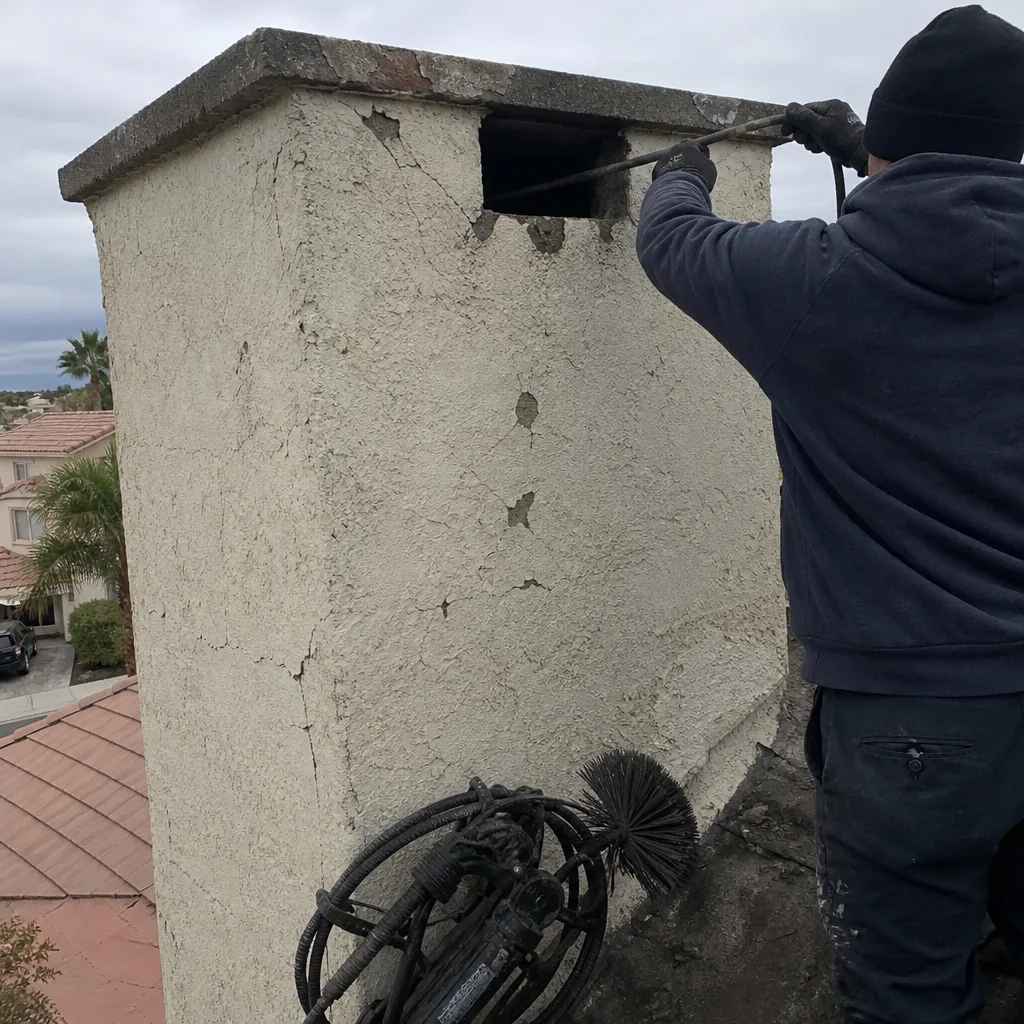 Before
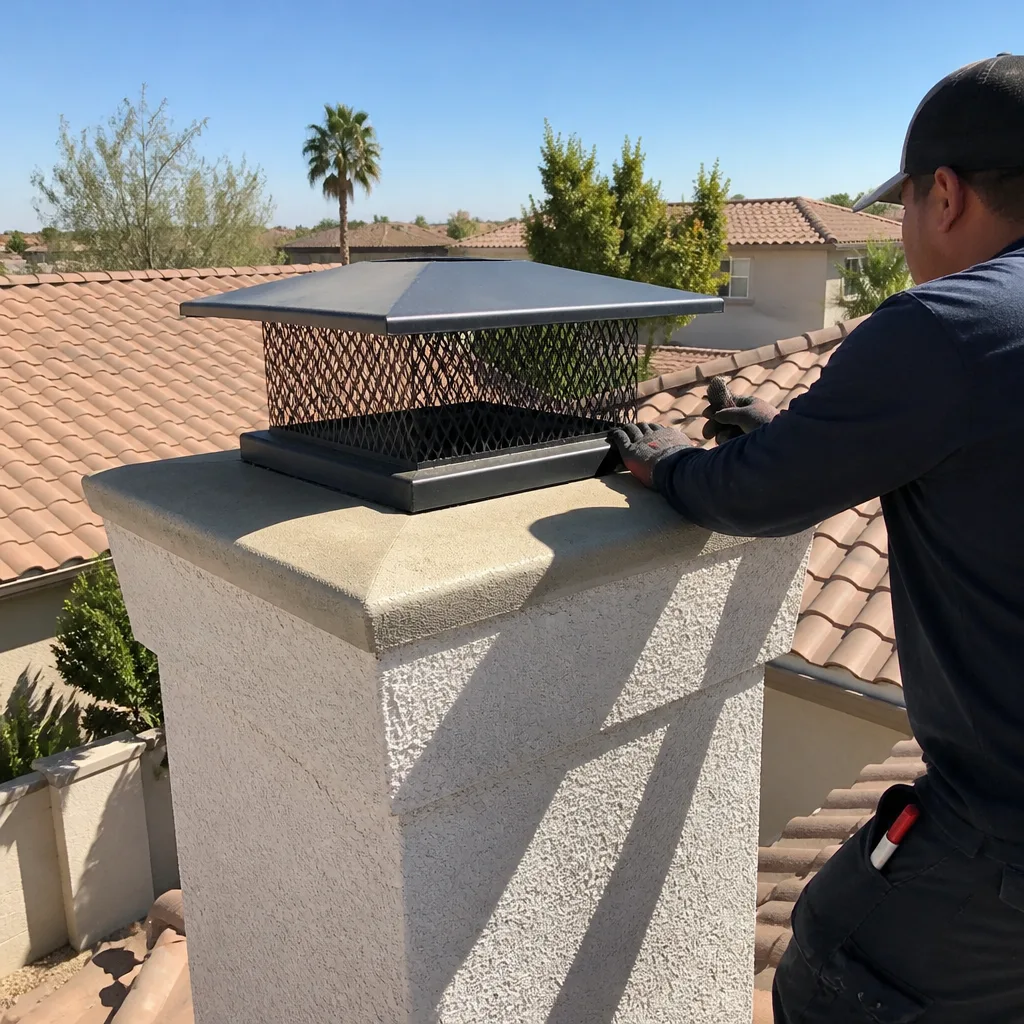 After
After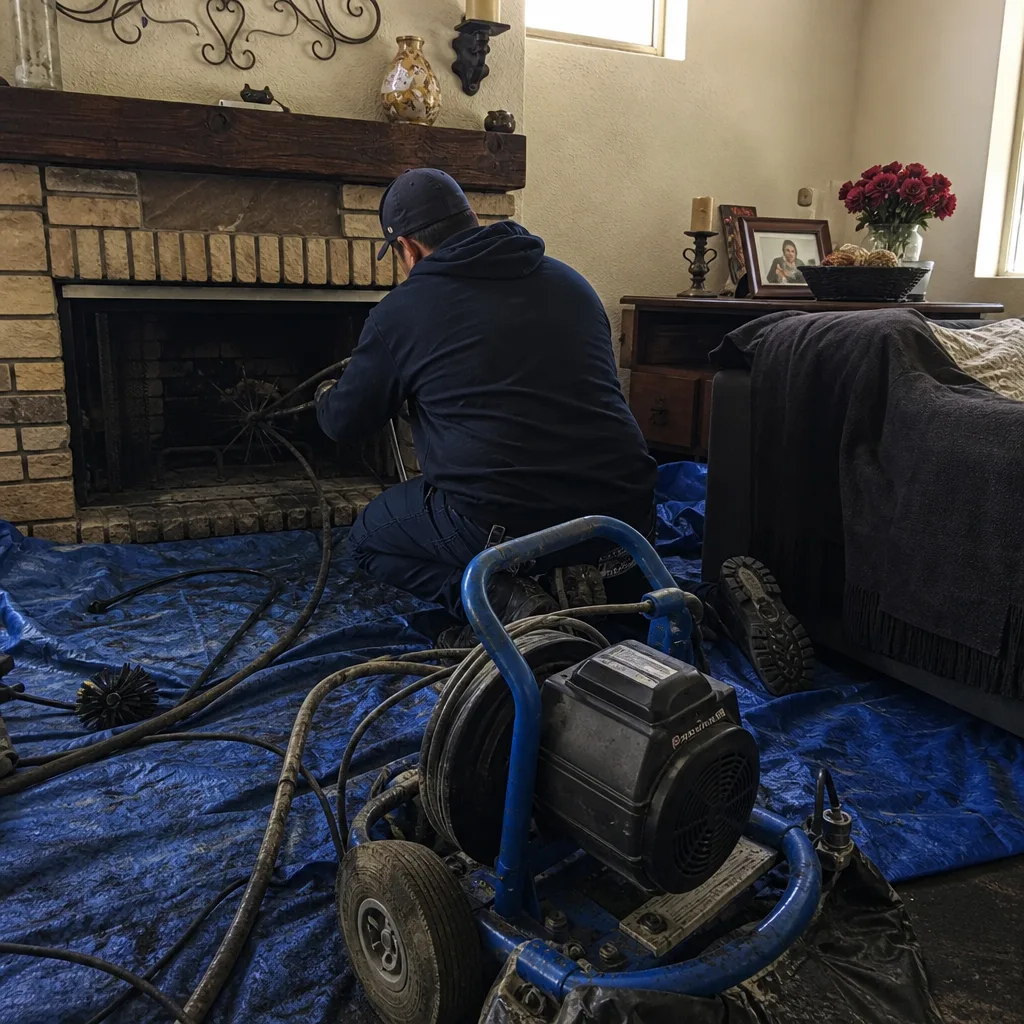 Before
 After
After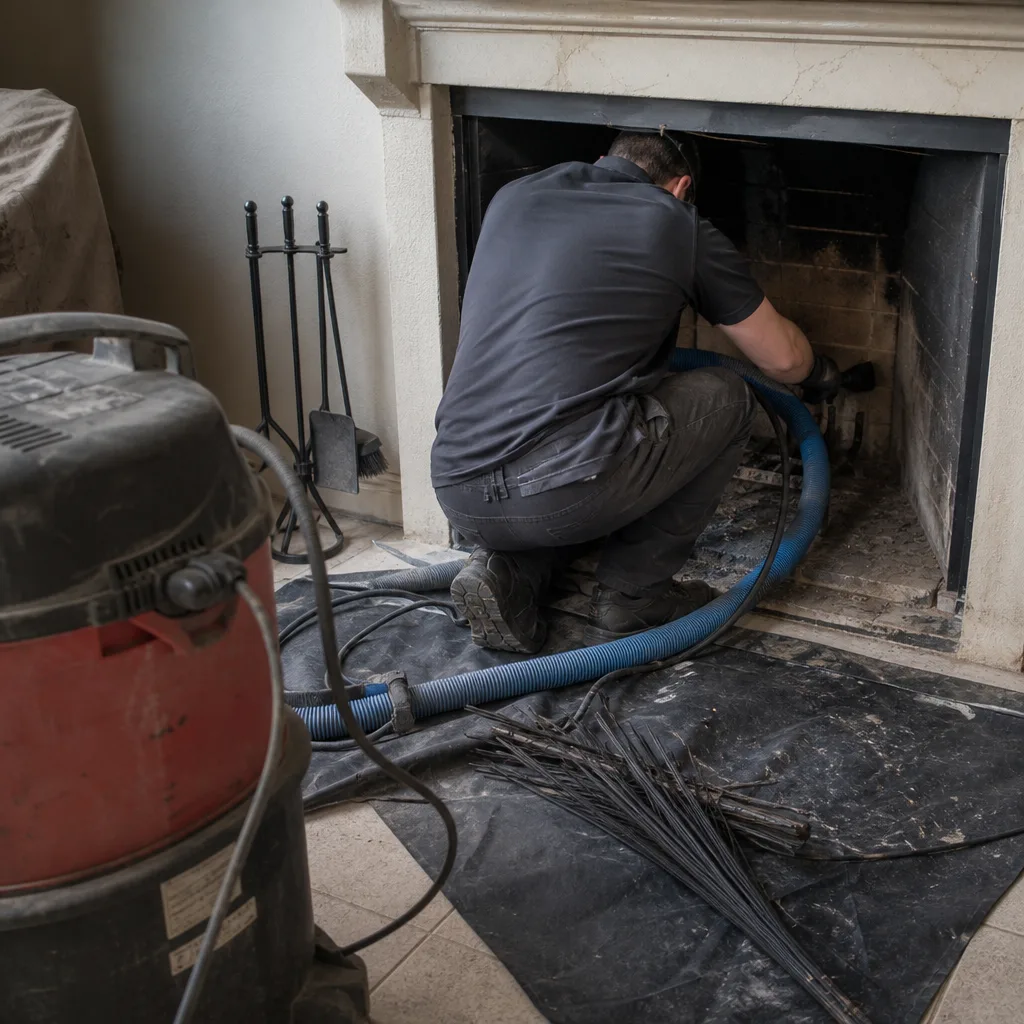 Before
 After
After