
Last updated October 15, 2026
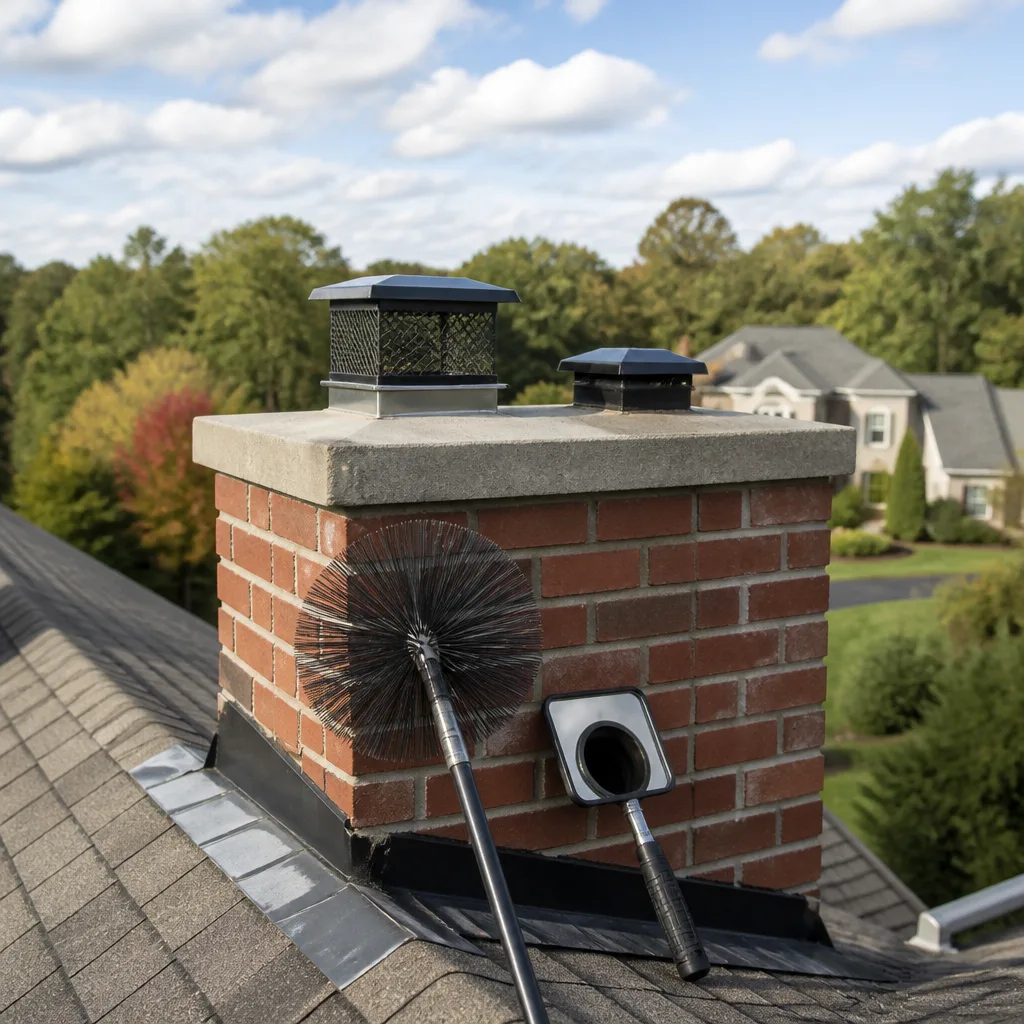 Sweep & inspection
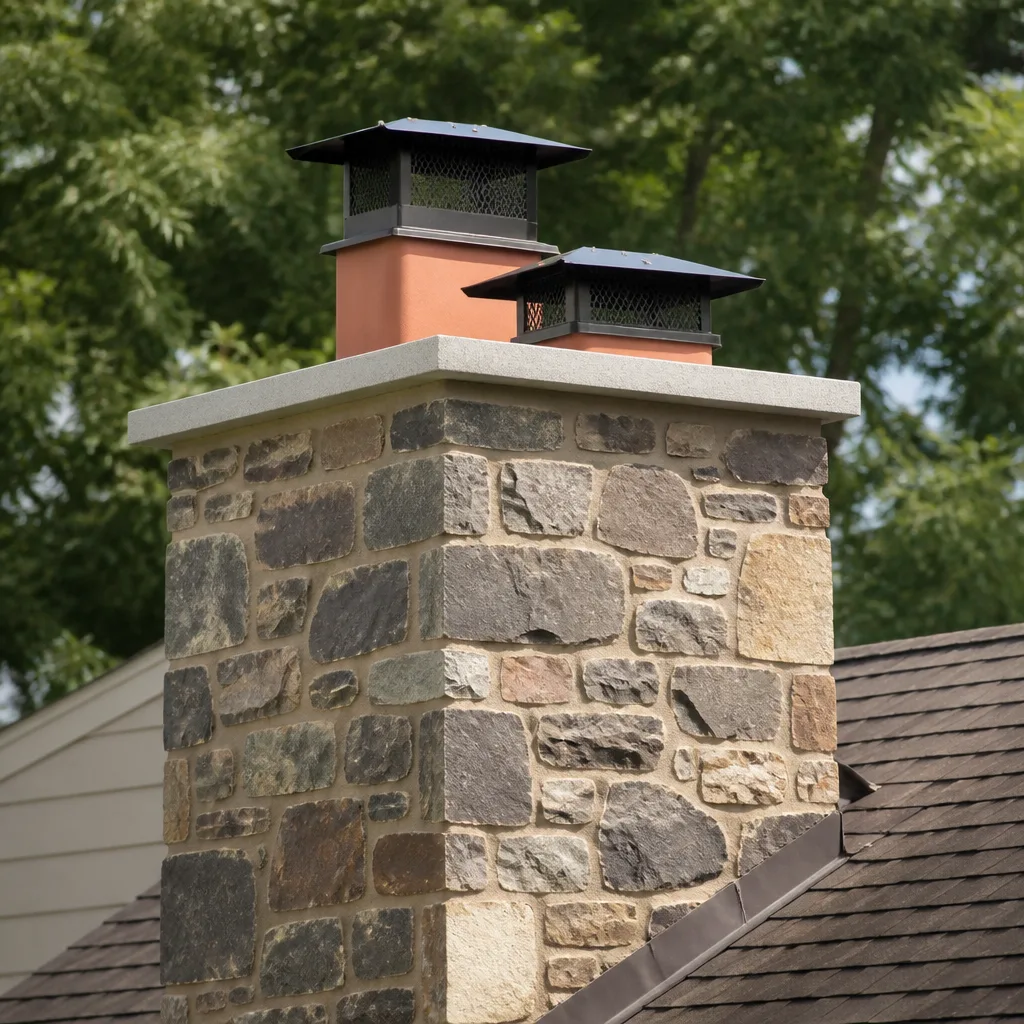 Caps & crowns
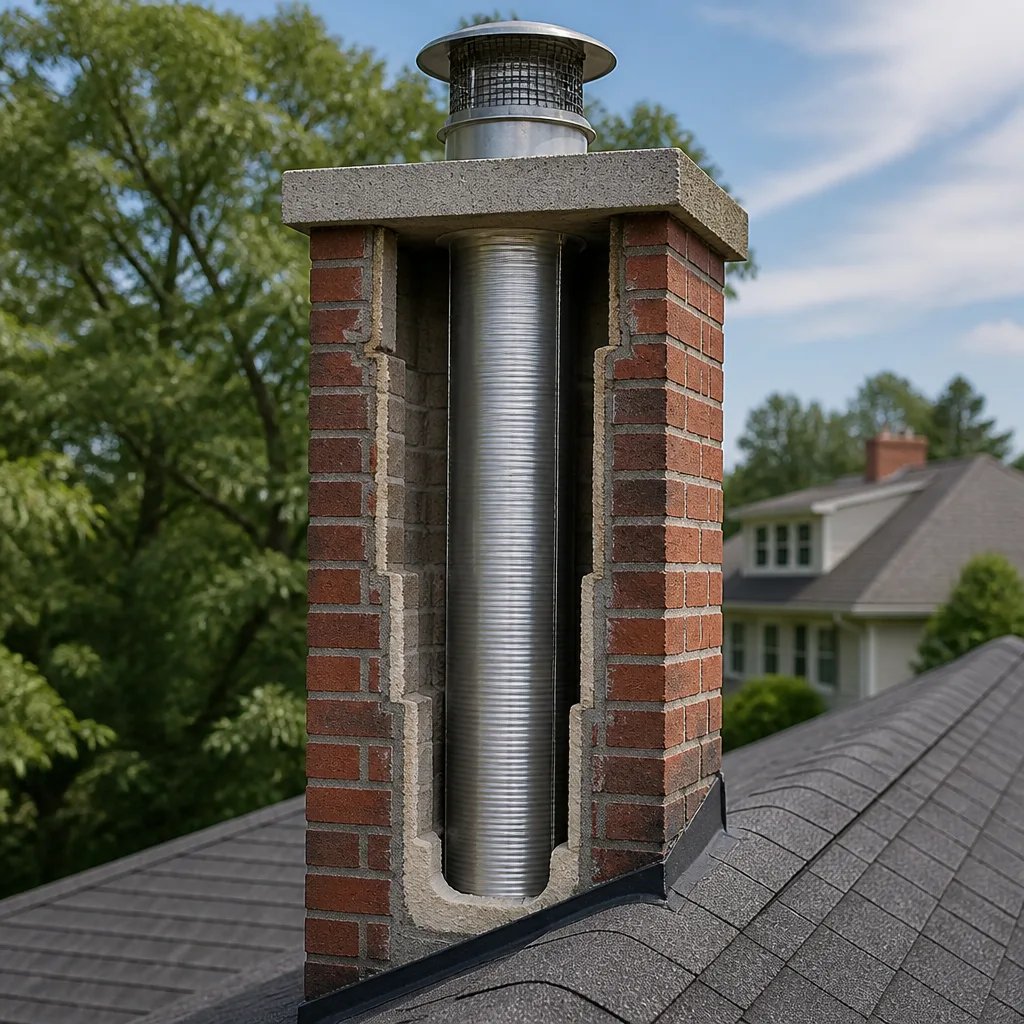 Flue relining
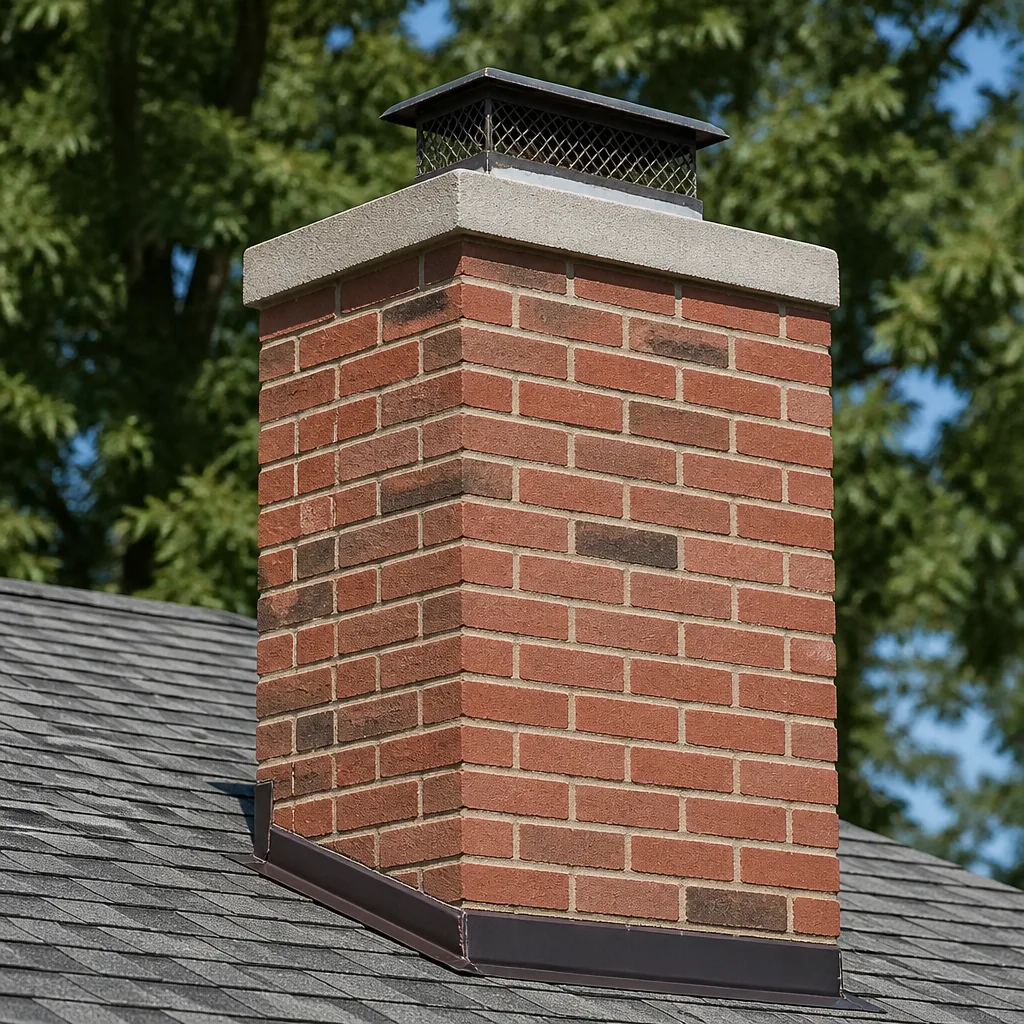 Masonry repair
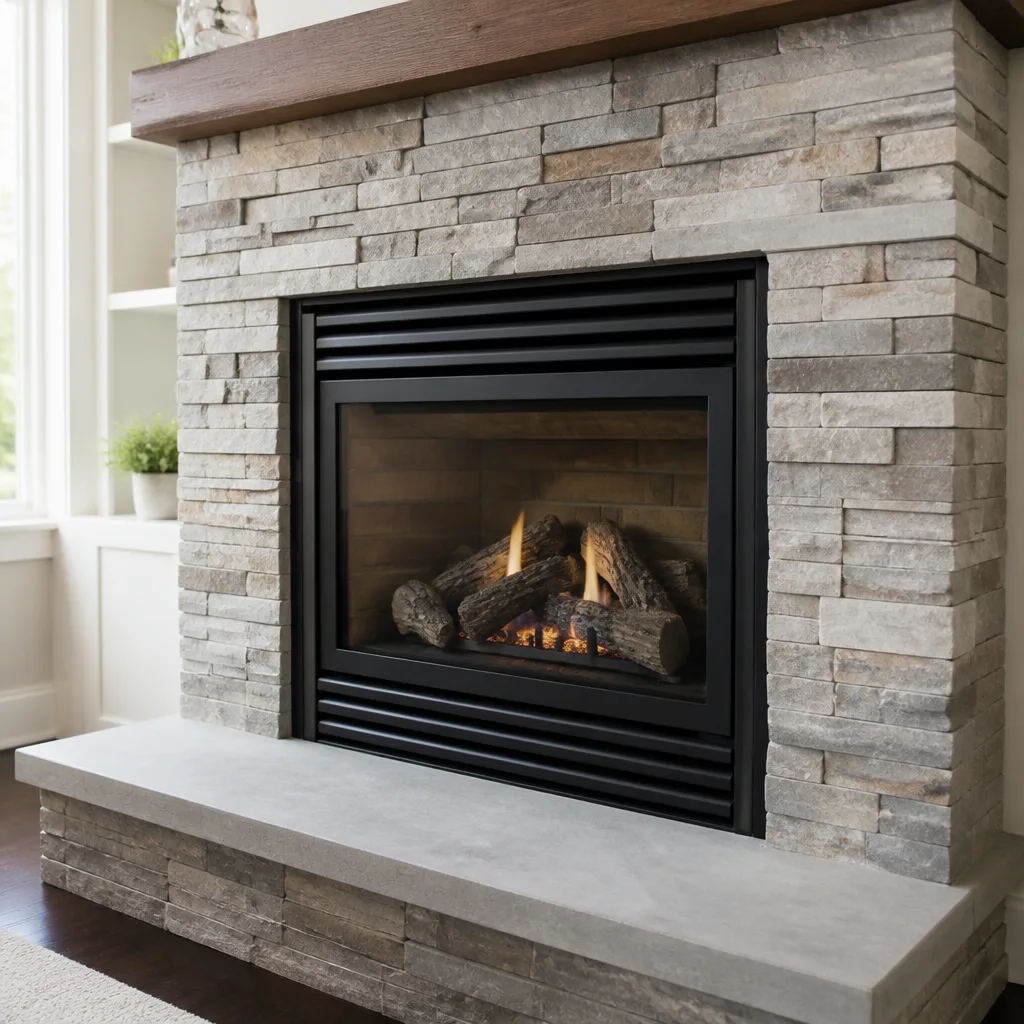 Gas fireplace service
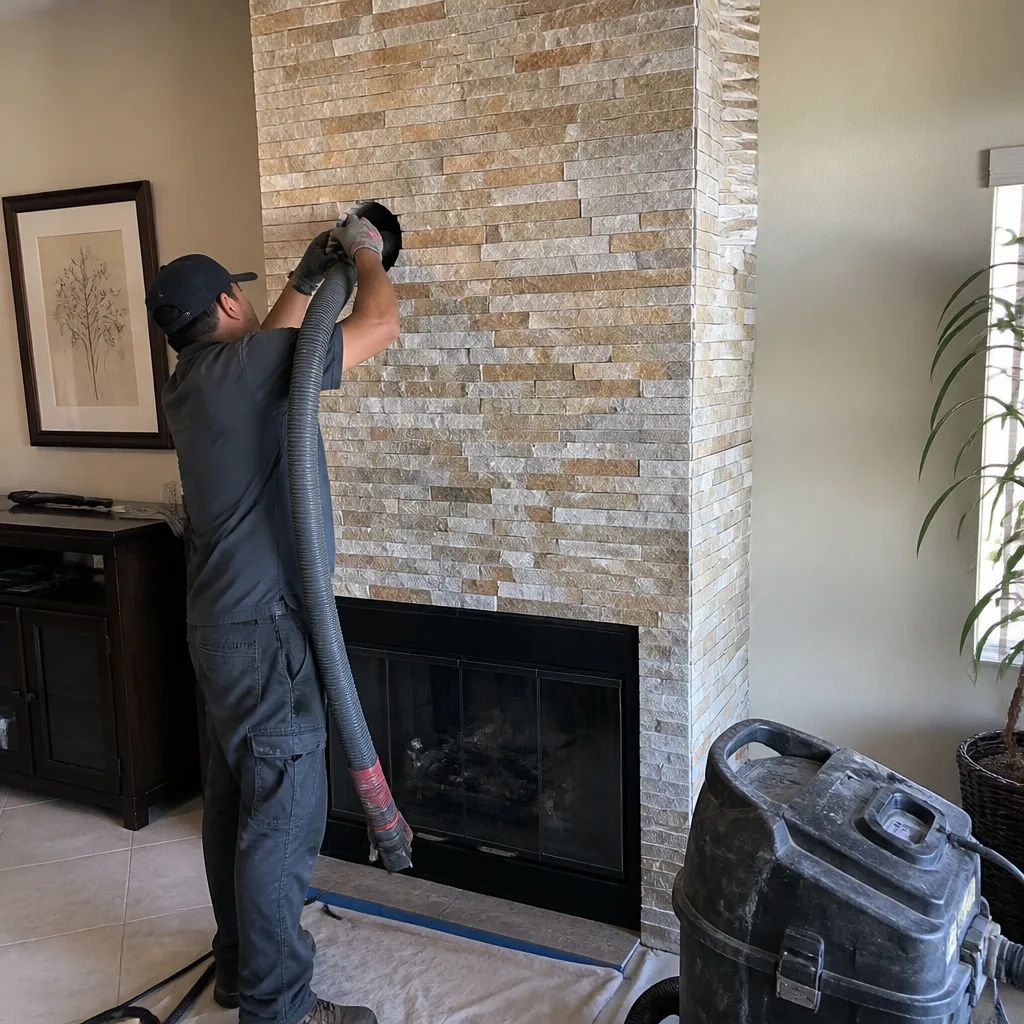
Level 1 sweep and inspection to the NFPA 211 annual standard - flue, crown, cap, and flashing checked and photographed
Chimney sweep logs do not sweep chimneys. They loosen some creosote - which then falls where a brush and vacuum still have to collect it.
DIY vs Professional Chimney Cleaning: The Las Vegas Homeowner’s Decision Guide
Here’s the thing most chimney guides won’t tell you: the homeowner who swept their own flue for five years straight isn’t wrong. A brush, some rods, a shop vac, and a Saturday afternoon can handle a lightly used fireplace. But the thing that changes after year five in a Las Vegas flue is something a brush won’t fix and a flashlight won’t find. We’re going to walk through exactly where the DIY line sits, what shifts it in this climate, and how to make the call without spending a dollar more than you need to. For more context, see our Chimney Cleaning Cost Breakdown: The Las Vegas Homeowner’s Reference for 2026.
Styles & brands we work with
Quick Answer
DIY chimney cleaning is reasonable for Las Vegas homeowners who burn fewer than 30 fires per year, have a straight flue under 20 feet, and inspect their chimney cap and crown at least twice a year. If you burn more often, have an older masonry chimney, or haven’t had a camera inspection in the last five years, a professional sweep is the safer financial call, because the problems that matter in Las Vegas – monsoon moisture behind the cap, desert dust accelerating creosote buildup, heat-cycle cracks in clay liners – are exactly the ones a brush can’t address. For step-by-step guidance on finding the right pro, read our How to Hire a Chimney Cleaning Contractor in Las Vegas: A Step-by-Step Guide.
Table of Contents
- The Honest DIY Capability Assessment
- When DIY Cleaning Is Genuinely Adequate
- Where DIY Stops Being Adequate: The Four Las Vegas Tipping Points
- Why Las Vegas Conditions Shift the DIY Calculus
- What a Professional Cleaning Includes Beyond the Brush
- The Real Cost Comparison: DIY vs Professional in Las Vegas
- The DIY Toolbox: What You’re Actually Buying
- Common Mistakes to Avoid
- When to Call a Professional
- Frequently Asked Questions
- The Bottom Line
The Honest DIY Capability Assessment
Before we tell you whether to climb on your roof, let’s talk about what the job actually requires. Not the scare-mongering version where you need a doctorate in masonry, and not the optimistic version where anyone with a drill and a YouTube video can handle it in an hour. The truth sits somewhere in between, and it depends on three things: your tools, your chimney’s geometry, and your comfort with heights.
At minimum, a proper DIY sweep requires:
- A chimney brush sized to your flue’s exact interior dimensions (too small scrapes nothing, too large jams)
- Fiberglass or polypropylene rods long enough to reach the full flue length plus three feet
- A heavy-duty vacuum with a HEPA filter rated for fine dust, not the one you use for drywall
- Drop cloths, painter’s tape, and plastic sheeting to seal off the firebox opening
- A dust mask rated N95 or better, safety glasses, and gloves
- A ladder tall enough to reach your chimney cap safely, not stretched to its limit
- Someone on the ground who can access the firebox while you’re on the roof
The total cost for that setup, new, runs between $180 and $350 depending on brush quality and whether you already own a strong vacuum. That’s the first thing that surprises most homeowners: you don’t actually save much on your first cleaning once you buy the gear. The savings kick in on the second and third cleanings, assuming you clean monthly during burning season as recommended for heavy use, or once a year for light use.
The skill requirement is lower than most people expect for a straight, unlined, one-story flue. You’re literally running a brush through a tube. The challenges are physical: working at roof height, managing the rods without bending them, and containing the fine dust that billows out of the firebox even when you’ve sealed it. If you have good balance, patience, and a helper, you can learn the basics in an afternoon.
But here’s the part most DIY guides skip: the brush only tells you what’s loose. It does not tell you whether your clay liner has a hairline crack from seven years of 110-degree-to-40-degree temperature swings. It does not tell you whether monsoon season last summer left water pooling behind your crown that’s now eating the mortar. It does not tell you whether your cap mesh is rusted through in a spot you can’t see from the ground. In Las Vegas, those are the inspection items that matter, and they require a camera or a trained eye, not a brush.
When DIY Cleaning Is Genuinely Adequate
We’re not going to tell you that every chimney needs a professional every year. That’s dishonest, and it’s also bad for you, because it trains homeowners to tune out. The honest truth is that DIY works, and works well, in a specific set of circumstances.
Here are the conditions where we’d say go ahead and clean it yourself:
- You burn fewer than 30 fires per year. At that level, creosote builds slowly, and a single annual brushing is usually sufficient.
- You burn only seasoned hardwood or manufactured logs like Duraflame. Green wood and softwoods like pine produce significantly more creosote per fire.
- Your chimney is straight or nearly straight. Bends and offsets trap debris and make a brush job incomplete without the right technique.
- Your fireplace was built after 1990 and has a stainless or clay liner in good condition. Older unlined chimneys or liners with visible cracks should be inspected before any cleaning method, DIY or professional.
- You keep a log of every fire you burn. Fuel type, frequency, and about how long each fire lasted. This is the single most useful diagnostic tool a homeowner can keep.
- You can visually inspect your cap, crown, and the top section of your flue safely from the roofline. If you can’t get to it safely, you’re cleaning blind.
If all six of those apply, you’re a good candidate for DIY cleaning. The brush-and-vacuum method removes the loose creosote deposits that are the primary fire hazard. You’ll save $150 to $250 per year after your initial equipment purchase. And you’ll learn enough about your own fireplace to be a smarter customer when you eventually do need professional work.
The key phrase here is “if all six apply.” Sweeping is only half the job. The other half is inspection, and that’s what we’re getting to next.
Where DIY Stops Being Adequate: The Four Las Vegas Tipping Points
Here’s the counterintuitive part of this guide. The homeowner who DIY-cleans for five years and never has a problem isn’t proving that DIY is safe. They’re proving that their chimney hasn’t encountered one of the four failure modes yet. And in Las Vegas, those failure modes are more common than most homeowners realize.
Tipping Point 1: The Recurring Backdraft You Can’t Explain
You light a fire and the smoke doesn’t go up. It huffs back into the room. You open a window and it gets slightly better. You chalk it up to wind. What’s actually happening could be a dozen different things: a blocked cap from bird nesting, a flue that’s now too narrow from creosote buildup you missed on the last sweep, a liner that’s collapsed inward, or simply that your home’s negative pressure has changed because you sealed your windows last spring.
A brush doesn’t diagnose any of these. A professional sweep starts with a draft test that measures the actual pressure differential in your flue. That’s the difference between “cleaned but still smoking” and “cleaned and actually fixed.”
Tipping Point 2: The Monsoon Season You Didn’t Think About
Las Vegas gets almost no rain, which is why many homeowners ignore chimney caps and crowns. Then the monsoon storms come through in July and August, dumping an inch of wind-driven water in an hour. Your flue is designed to handle heat, not horizontal rain. If your cap is loose, rusted, or missing mesh, that water runs down the inside of your flue where you never see it. It soaks into the clay tiles, then flash-dries in the next day’s 105-degree heat. That cycle creates micro-cracks. Then more micro-cracks. Then one day you have a chimney fire and the water-damaged clay spalls, sending fragments down into your firebox.
DIY cleaning won’t find this. A camera inspection at the start of every Las Vegas summer will.
Tipping Point 3: The Creosote You Can’t See Through the Soot
Not all creosote is the flaky black stuff that brushes off. Third-degree glazed creosote is a hard, shiny coating that resembles tar or glass. It forms when the flue runs hot, then cools quickly, repeatedly. That’s exactly the thermal rhythm of a Las Vegas fireplace: bursts of high heat on cold desert nights, followed by rapid cooling. Glazed creosote is the most combustible form of creosote, with a lower ignition temperature than creosote dust. A standard brush slides right over it without removing anything. Removing it properly requires a rotary loop system or chemical treatment, which means professional equipment.
Tipping Point 4: The Clay Liner Crack You Can’t See From Below
Your clay tile liner looks fine when you shine a flashlight up from the firebox. But the section above the roofline, the part exposed to 60-degree temperature swings every single day, is under constant thermal stress. When it cracks, combustion gases and carbon monoxide can leak into your wall cavity or attic before they ever reach the cap. That’s not a fire hazard as much as it’s an air quality hazard, and it’s invisible from the firebox. It requires a camera inspection or at least a bright work light from the roofline. Since 2002, we’ve found heat-cycle cracking in roughly one in eight Las Vegas chimneys over 20 years old during routine inspections. The homeowners had no idea, because the chimney “worked fine.”
Why Las Vegas Conditions Shift the DIY Calculus
If you live in Michigan, where chimneys freeze and snow load is the concern, the calculus is different. If you live in Seattle, you’re worried about year-round moisture. Las Vegas has its own set of conditions, and they’re additive rather than interchangeable. None of these are reasons to avoid DIY outright. They’re reasons to adjust your inspection schedule and your risk tolerance.
Desert Dust as an Accelerant
Creosote is sticky. Dust is abrasive. When the two combine, you get a compound that clings to flue walls better than pure creosote and insulates less evenly, creating hot spots. Your fireplace is drawing in dust from the same air you breathe every day. That dust coats your flue walls, then the next fire’s creosote deposits bond to it. The buildup happens faster than in humid or temperate climates, because the dust is always present. If you’re cleaning DIY, that means your interval between cleanings should be shorter than the generic “once a year” advice assumes.
Monsoon Moisture and the Hidden Crown Crack
We covered this above, but it bears repeating: Las Vegas’s damage season isn’t winter. It’s July through September. The monsoon storms that roll through Summerlin, Henderson, and North Las Vegas bring wind plus rain that falls too fast for the soil to absorb it. That water finds its way into every crack in your crown, every rust hole in your cap, every loose mortar joint in your brick. Then the heat returns and bakes it dry, expanding those cracks incrementally with each cycle.
A homeowner who cleans their own chimney in October and doesn’t look at the crown is cleaning the wrong half of the problem. The visible soot isn’t what’s hurting your chimney. The invisible moisture intrusion from the top is.
The Thermal Cycle Stress on Masonry
A Las Vegas summer day swings 35 to 40 degrees between peak afternoon and pre-dawn. Add 400-degree flue gas temperatures from a fire and you get thermal shock on your clay liner and mortar joints every single time you burn in the winter. Over 15 to 20 years, that repeated expansion and contraction micro-fractures the materials. No amount of brushing fixes micro-fractures. The fix is an inspection that catches them early, before a full liner replacement becomes the only option.
What a Professional Cleaning Includes Beyond the Brush
When we clean a chimney in Las Vegas, the brushing is about 40 minutes of a two-hour visit. The rest is inspection work that has nothing to do with removing soot. If you understand what those extra 80 minutes are for, you can better judge whether DIY is leaving you exposed.
- Camera inspection. A video camera with a light runs down the full flue length from the roofline. The camera shows you exactly what we see: cracks, gaps, missing mortar, glazed creosote, bird nests, obstruction. In Las Vegas, we prioritize this because thermal stress and monsoon moisture both create damage you can’t see with a flashlight.
- Draft testing. We measure the airflow through your chimney with the firebox cold and the flue at rest. Low draft indicates a blockage, a flue-sized too large for the firebox, or a negative pressure problem in your home. None of these are brush fixes.
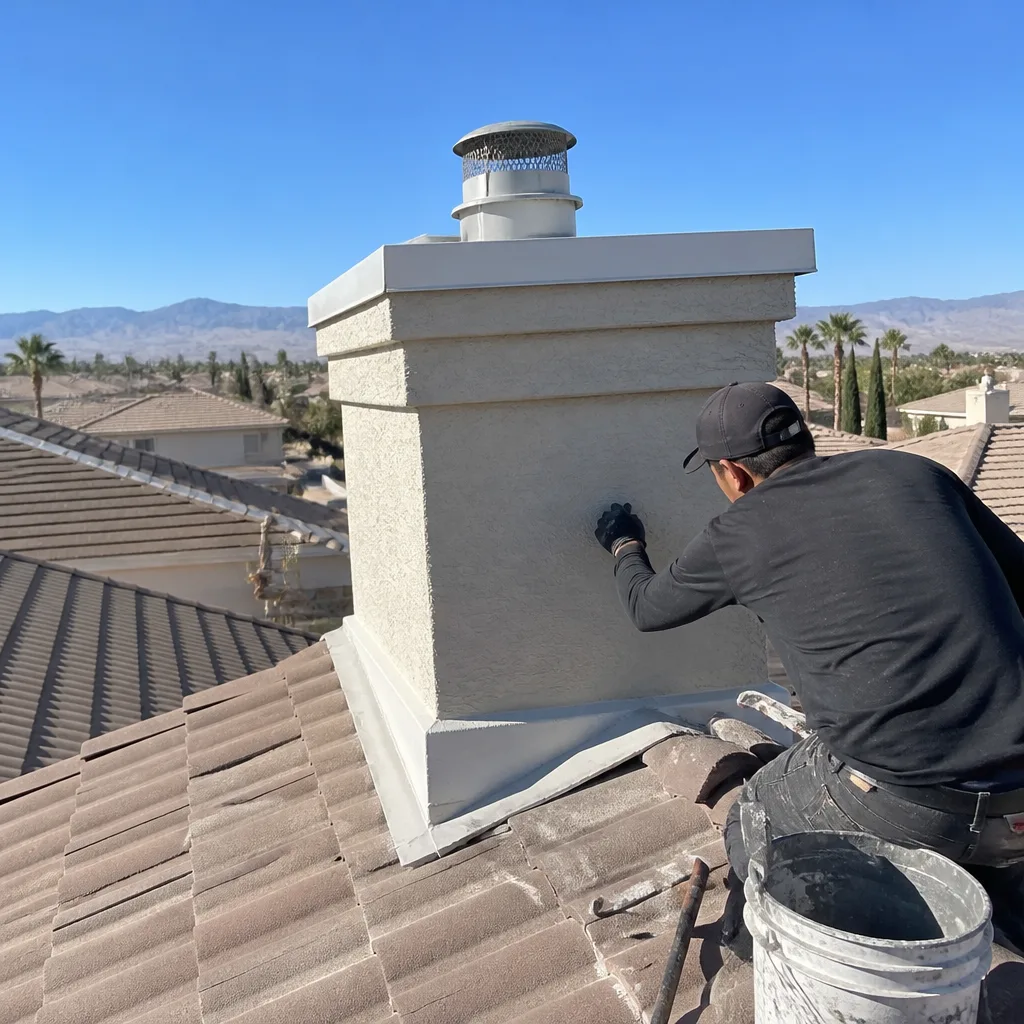
- Cap, screen, and crown assessment. From the roofline, we check for rust, loose mortar, cracked concrete, missing mesh. In Las Vegas, the cap is your primary defense against monsoon rain and bird intrusion. A $45 replacement mesh section can prevent a $2,000 crown rebuild.
- Smoke shelf and damper inspection. The smoke shelf is the flat spot just above your firebox where debris collects and where most animal entry happens. A clogged smoke shelf pushes smoke back into the room even with a clean flue.
- Firebox examination. Cracked firebrick, deteriorated mortar, rusted dampers. These are visible from the living room, and many homeowners never look at them closely. We do on every visit.
None of this is exclusive to professional chimney sweeping in Las Vegas. Anyone with a camera inspection system and the training to interpret what they see can do it. The point is that the brush itself is maybe 20% of what you’re paying for. If you’re only doing the brush part yourself, you’re skipping the other 80% of the safety check.
The Real Cost Comparison: DIY vs Professional in Las Vegas
Let’s put numbers on the table. A professional sweep from Ashby Chimney Las Vegas runs between $189 and $349 for a standard one-story masonry fireplace with a straight flue and clean cap access. Two-story chimneys, bends, heavy creosote, or animal removal push that higher. We give a written price before we start, so the door price is the invoice price.
DIY costs break down like this:
- Chimney brush kit with rods: $45 – $120 depending on flue size and rod material
- HEPA-rated vacuum (if you don’t own one): $80 – $250
- Drop cloths, plastic sheeting, painter’s tape: $20 – $35
- N95 mask, safety glasses, gloves: $15 – $30
- Ladder (if you don’t have one rated for roof access): $100 – $300
- Your Saturday afternoon: 3 – 5 hours including setup, cleaning, and teardown
First-year DIY cost: $260 to $735. Professional cost: $189 to $349. Year-two DIY cost (assuming equipment is owned): $35 to $65 for supplies and replacement brush heads. Professional cost: same as year one.
So the financial break-even point is around year two or three if you already own a ladder and a strong vacuum. If you need to buy those, the professional is cheaper for the first two years. That’s a realistic ROI calculation most DIY guides don’t bother with.
The cost you can’t quantify is the missed inspection. If you DIY-clean for five years and never get a camera inspection, and then discover a cracked liner that requires fireplace repair in Las Vegas at $2,500, you didn’t save $1,500 over five years. You spent $1,000 more than you would have if the crack had been caught early. That’s the bet you’re making with DIY.
The DIY Toolbox: What You’re Actually Buying
If you’ve read this far and decided DIY is the right call for your situation, let’s get specific about what to buy and what to skip. This is the honest gear list, not the affiliate-link version.
Worth spending on:
- A brush sized exactly to your flue. Measure the interior width of your flue at the top and the bottom. If they differ by more than half an inch, you need a tapered brush or two sizes. A brush that’s too small just polishes the creosote. Too large and you’ll jam it.
- Polypropylene rods over fiberglass where possible. They’re more flexible and less likely to snap when you’re working at odd angles.
- A vacuum with a HEPA filter and a long hose. The fines from creosote are fine enough to pass through standard shop vac filters. You don’t want that in your living room air.
Worth skipping:
- Chemical creosote removers. The powders and logs you throw into the fire to “treat” creosote. They have some effect on loose first-degree creosote, but they do nothing for glazed creosote, and they can give a false sense of security that your flue is cleaner than it is.
- Rotary drill attachments for standard drills. They spin too fast and can score clay liners. If you need rotary cleaning, that’s a professional-grade tool with a low-speed setting.
- Cheap inspection cameras from big-box stores. The resolution and lighting are inadequate for seeing hairline cracks in a clay liner. You’ll get a better view with a bright work light and a mirror on a stick, which is what we used for years before camera systems got cheaper.
One more practical note: clean from the top down when possible, not from the firebox up. Top-down cleaning means gravity works with you, and the dust falls into the firebox where your vacuum is set up. Bottom-up cleaning with a drill attachment kicks dust into your living room, no matter how well you seal the opening.
Common Mistakes to Avoid
- Cleaning from the firebox up without a proper seal. You’ll fill your living room with fine black dust that takes weeks to fully clean out of upholstery and carpet. We’ve seen it dozens of times in Las Vegas homes across Green Valley and Summerlin.
- Assuming “clean-looking flue” means “safe chimney.” The brush only removes loose creosote. Hairline cracks, glazed creosote, and crown damage are invisible to a brush. This is the Number 1 false sense of security we see in DIY chimney care.
- Skipping the cap inspection. After monsoon season, the cap is the first thing that fails. Check it in September, not in December when you’re ready to burn.
- Using green or wet wood because it’s cheaper at the gas station. In the Las Vegas metro, the wood you buy at convenience stores is often low-density pine or mixed scrap that burns wet and cool. That produces creosote faster than properly seasoned hardwood.
- Vacuuming without a HEPA filter. Creosote dust is a lung irritant and a potential carcinogen in concentrated exposure. A standard shop vac filter doesn’t capture it. You’ll blow it out the exhaust port and into your room.
- Climbing onto a tile roof in sandals or without a spotter. Tile roofs are common across Las Vegas from Henderson to Northwest. They’re slippery, and the tiles crack under concentrated weight. Use a roof ladder and have someone holding it.
- Waiting until December to do your first cleanup. The best time to clean a chimney in Las Vegas is September, after monsoon season and before the first cold snap. That way you catch monsoon damage early and start the burning season with a clean flue.
When to Call a Professional
Call a professional if you’ve had any of these signs: smoke entering the room when the damper is open, a persistent odor from the fireplace when it’s not in use, visible cracks in the firebrick or the exterior masonry, evidence of water in the firebox after a storm, or if it’s been more than five years since a camera inspection. Also call if you’re not comfortable getting on your roof, full stop. None of this is worth a fall. Ashby Chimney Las Vegas offers free estimates in Las Vegas, Henderson, and North Las Vegas. Call (725) 220-6109 and we’ll give you a written price before any work starts, no exceptions.
Our chimney inspection service in Las Vegas is also available as a standalone visit if you’ve been DIY-cleaning and just want a professional set of eyes on the flue before the burning season. We show you the camera footage and tell you plainly whether anything needs attention, and whether it can wait.
Frequently Asked Questions
A professional chimney sweep in Las Vegas typically costs between $189 and $349 for a standard one-story fireplace with a straight flue and accessible cap. Two-story homes, bends in the flue, heavy creosote buildup, or animal removal push that toward the higher end or beyond. At Ashby, the written price we give before starting is the price on the invoice. Call (725) 220-6109 for a free estimate.
If you burn more than 30 fires per year, sweep once per year. If you burn fewer than 30, once every two years is usually sufficient, but you should still inspect the cap, crown, and firebox visually every September after monsoon season. In Las Vegas, the bigger risk than creosote buildup is water damage from monsoon storms and thermal cracking over time, and those need inspection more than they need brushing. Our Seasonal Chimney Cleaning Care for Las Vegas: Year-Round Homeowner’s Guide breaks down what to check each season.
You might not. The only way to answer that honestly is with a camera inspection that shows you exactly what we’re seeing. If the clay liner has minor cracking but no gaps and no evidence of water intrusion, you can often extend its life with a product like HeatShield or Gelco resurfacing rather than a full liner replacement. If there’s significant spalling, gaps between tiles, or water damage, replacement with a stainless liner from Olympia Chimney or Famco is the honest fix. We don’t recommend liner work we can’t show you on camera. Call (725) 220-6109 for a camera inspection, and if you decide to get a second opinion, the footage is yours to keep.
The creosote deposits in your flue become thicker and, in the Las Vegas thermal cycle, more likely to transition into glazed third-degree creosote. Glazed creosote is dense, flammable, and can sustain a chimney fire that reaches temperatures high enough to crack clay tiles and transfer heat into your framing. Even without a fire, skipped inspections mean water intrusion goes unaddressed, and monsoon damage compounds year over year. By October, your chimney issues are either fixed with a sweep and a cap replacement, or with a $2,000-plus liner job. The earlier we see it, the less it costs you.
For a specifically defined set of conditions, yes: fewer than 30 fires per year, seasoned hardwood only, straight flue, modern liner in good condition, and safe roof access. The physical risk is mostly the roof work itself, not the brushing. The bigger risk is the false confidence that a brush job replaces an inspection. It doesn’t. Sweep yourself if you meet the criteria, but get a camera inspection every three to five years, and always after a heavy monsoon season.
Ask for a written price before any work starts, not an estimate over the phone that can shift at your door. Ask what’s included: a brush job alone, or a brush job plus cap, crown, damper, and firebox inspection? Ask to see the camera footage if the company says you need a repair. We show it every time, because nothing we recommend is based on what you can’t see. The fireplace repair work we do in Las Vegas comes with a written guarantee on every job and a free second visit if the repair fails, because that’s the standard the Kingswell Guarantee requires of us.
The Bottom Line
DIY chimney cleaning in Las Vegas is a reasonable choice for the right homeowner: light burner, straight flue, sealed cap, good roof access, honest records. It stops being reasonable when the chimney reaches the point where the problems are structural rather than superficial. In this climate, those problems arrive on schedule. Monsoon water, thermal stress, and desert dust all work against your flue in ways a brush can’t address. The smart move isn’t to abandon DIY or to hand every cleaning to a professional. It’s to sweep what you can see, and to get a camera on what you can’t. However you handle the brushing, get an inspection before the season starts.
Written by Nathan Corliss, Owner at Ashby Chimney Las Vegas, serving Las Vegas since 2002.
See the difference
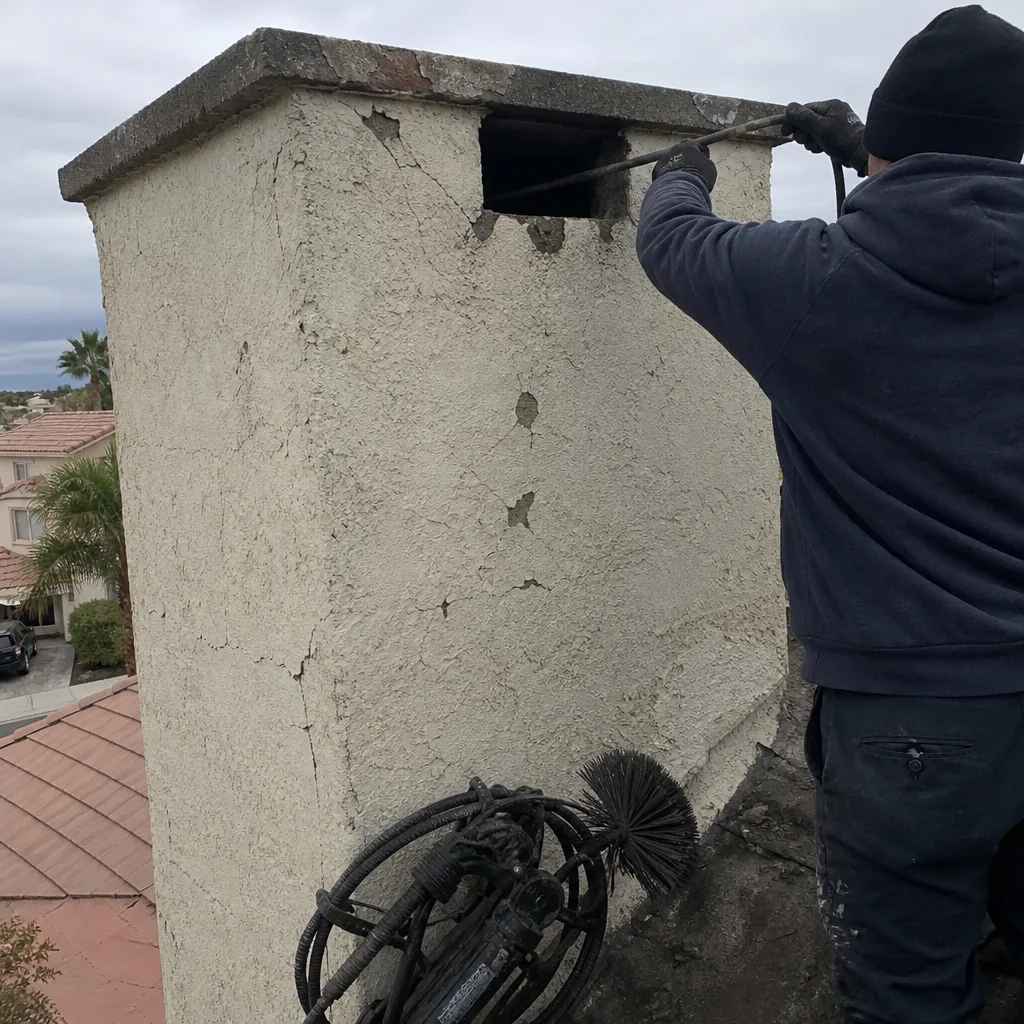 Before
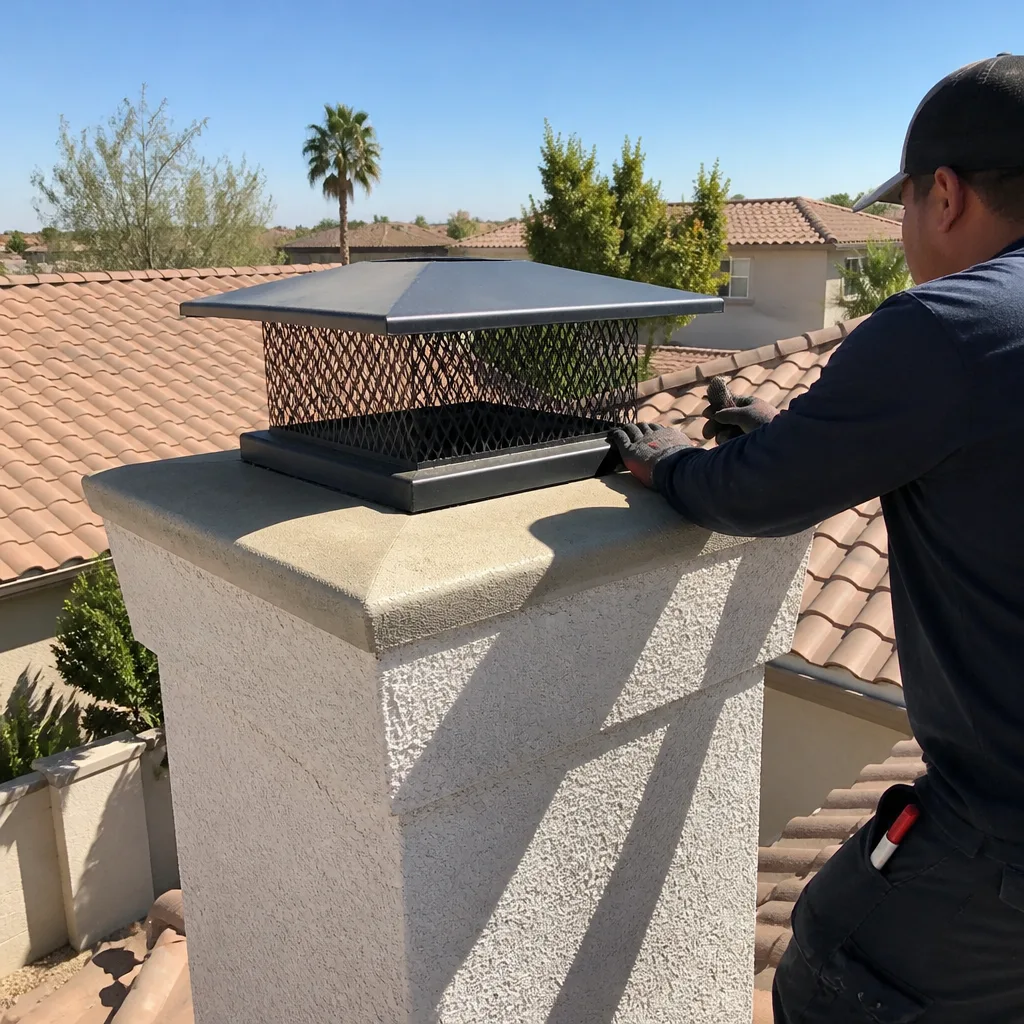 After
After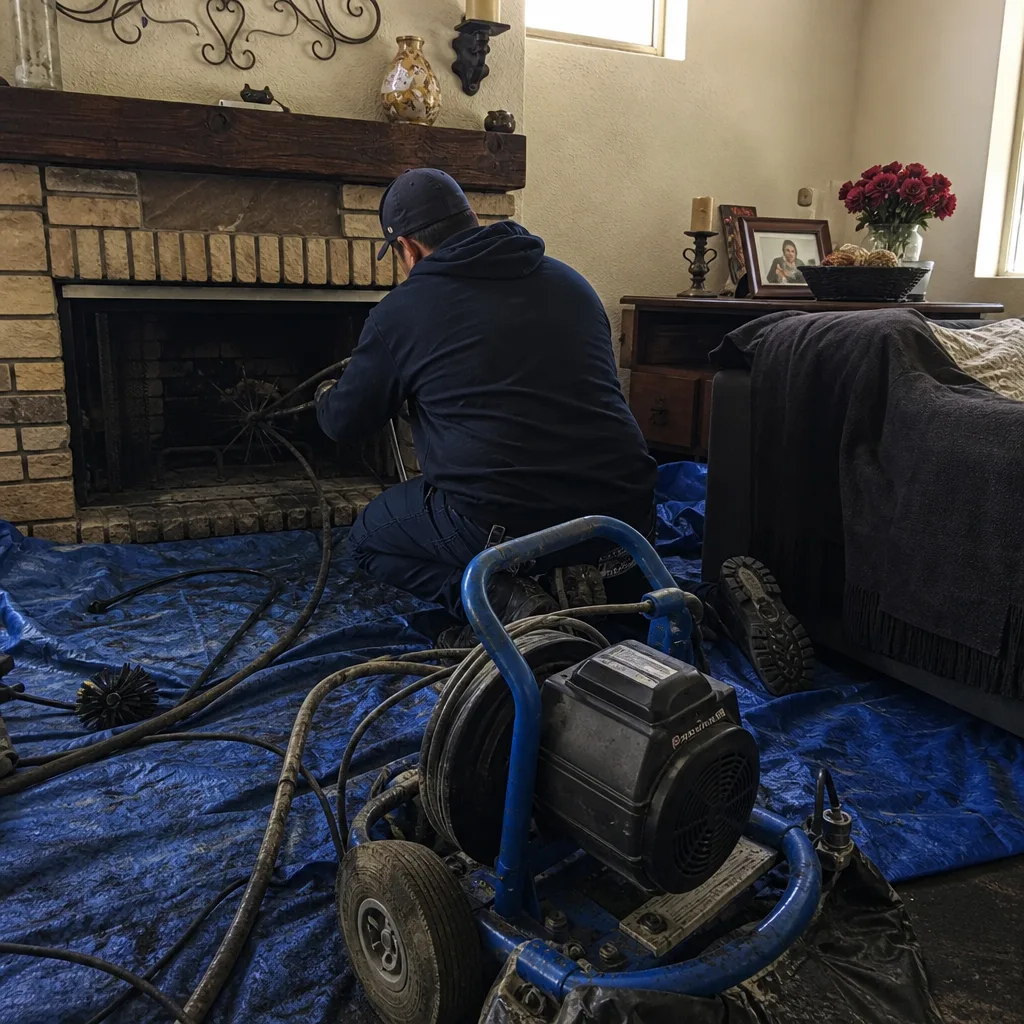 Before
 After
After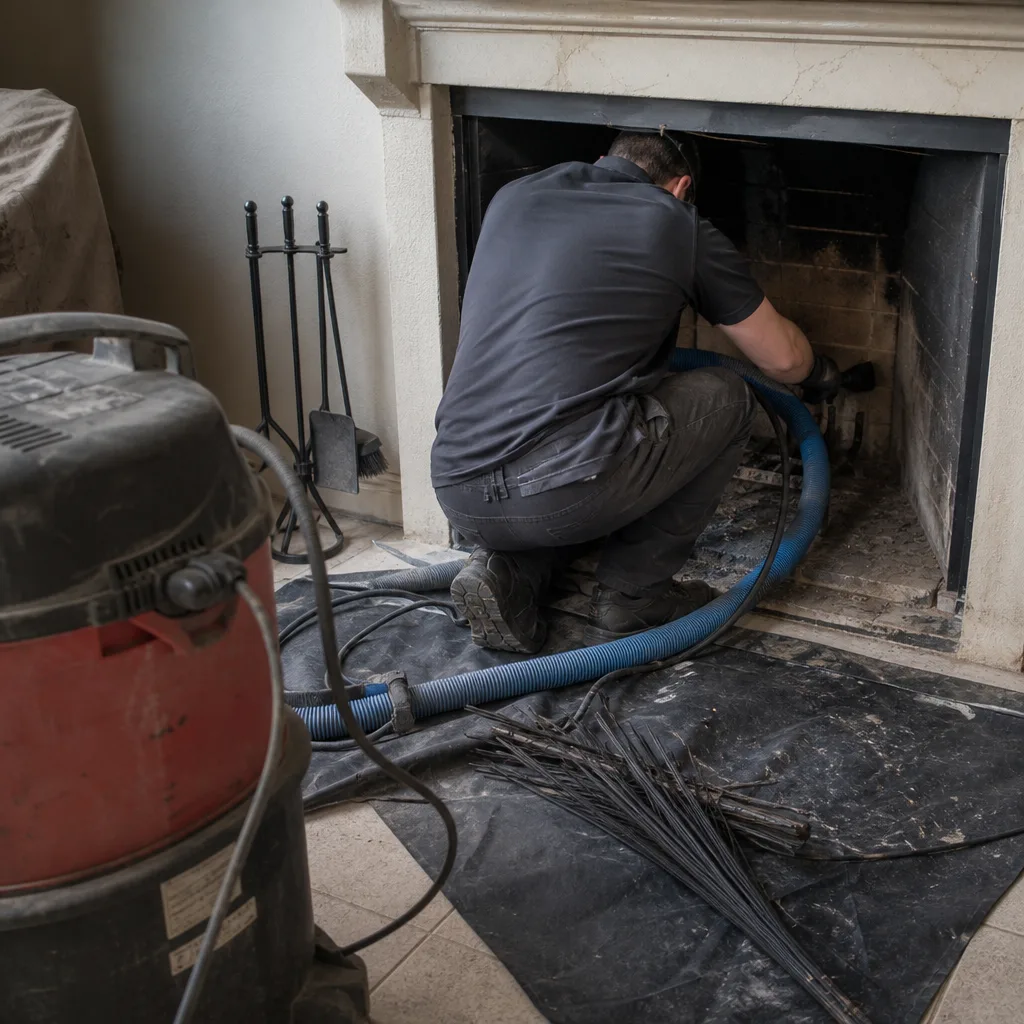 Before
 After
After